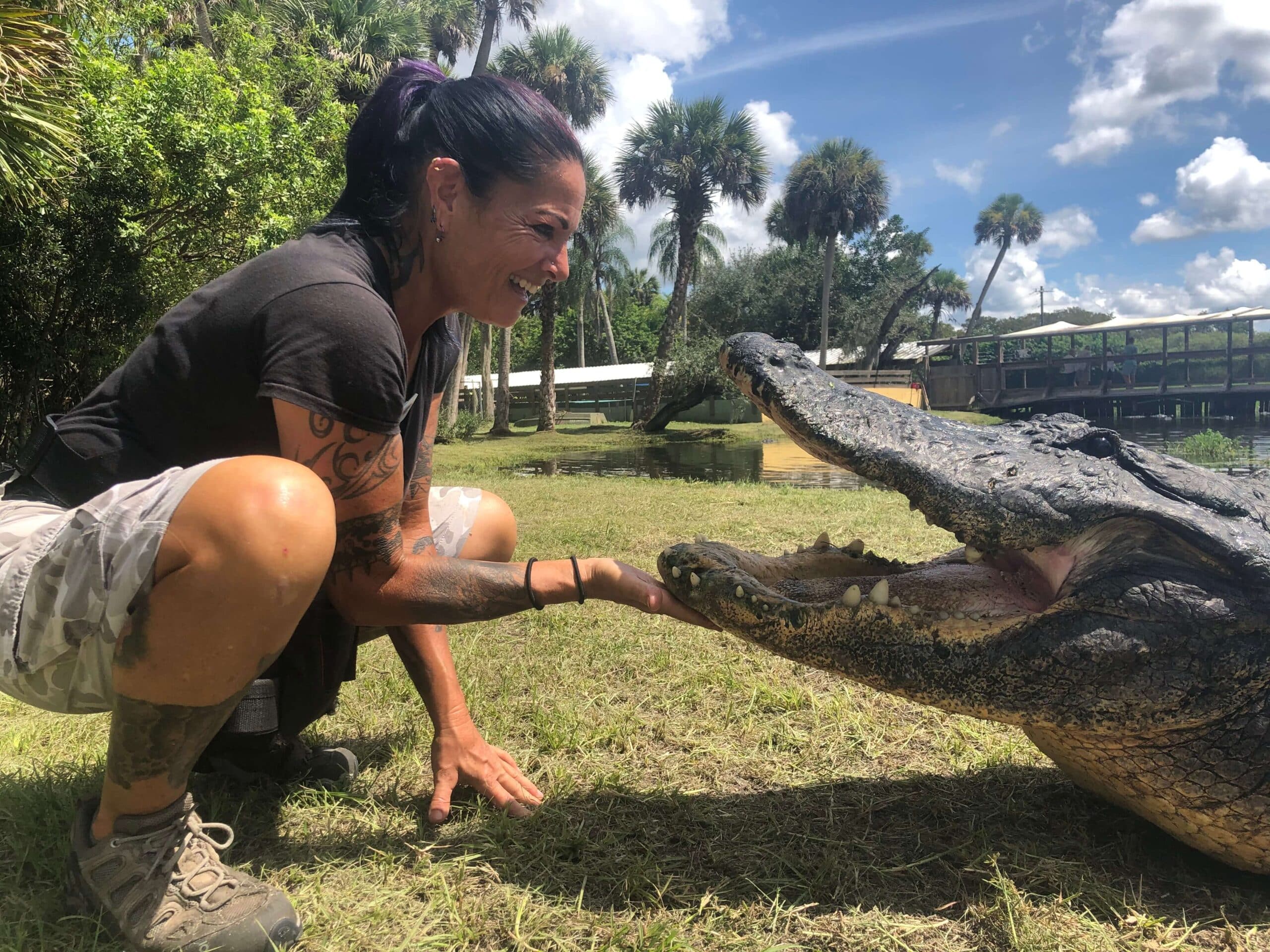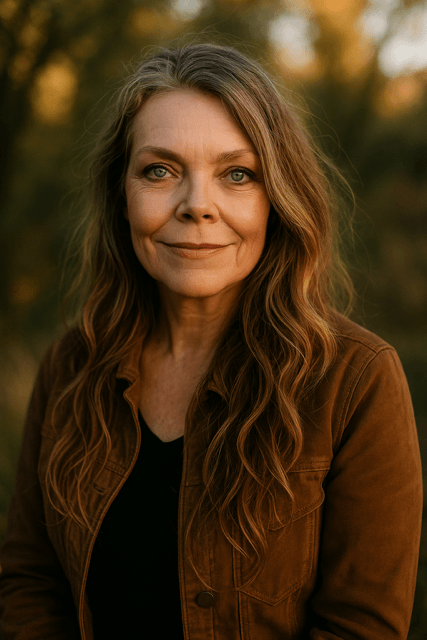
Not many artists can say their journey to mastering realism involved working alongside alligators, but Claire Hickman isn’t your typical artist. After retiring from a career as an art teacher, Claire made a unique pivot: she became an alligator trainer at Gatorama, an alligator farm in Florida. But for Claire, this wasn’t a departure from art, it was a deeper dive into it. “It helps drawing the animals if I know them,” she explains with quiet conviction. Those years at the zoo weren’t just about incredible experiences with reptiles; they were about understanding her subjects from the inside out. She even attended crocodilian school in St. Augustine to study anatomy, translating muscle structure and movement into the intricate pen-and-ink drawings that have become her signature.
Claire’s love affair with art began long before the alligators, though. As a child, she taught herself to draw, encouraged by a first-grade art teacher who saw something special in her work and parents who made sure she never ran out of art supplies. By middle school, she’d found her medium: pen and ink. Decades later, she’s still refining those same skills, now channeling them into breathtakingly detailed wildlife portraits. Today, having traded the Florida zoo for the horse farms of Ocala, Claire continues to pursue what has always driven her work: a fascination with animals and an unwavering commitment to capturing the world around her.
Here at Equine Instincts, we had the pleasure of interviewing represented artist Claire Hickman to learn more about her meticulous process, her unexpected path from classroom to crocodile enclosure, and how knowing an animal changes the way you see it.
What Does the Creative Process Look Like?
For Claire, every piece begins with a feeling, a photograph that speaks to her immediately, demanding to be drawn. “First, I have to get a photograph that speaks to me right off the bat,” she explains. There’s no forcing inspiration, as the connection is either there or it isn’t. Once that spark ignites, Claire begins with a vague pencil outline on paper, just enough structure to guide what comes next.
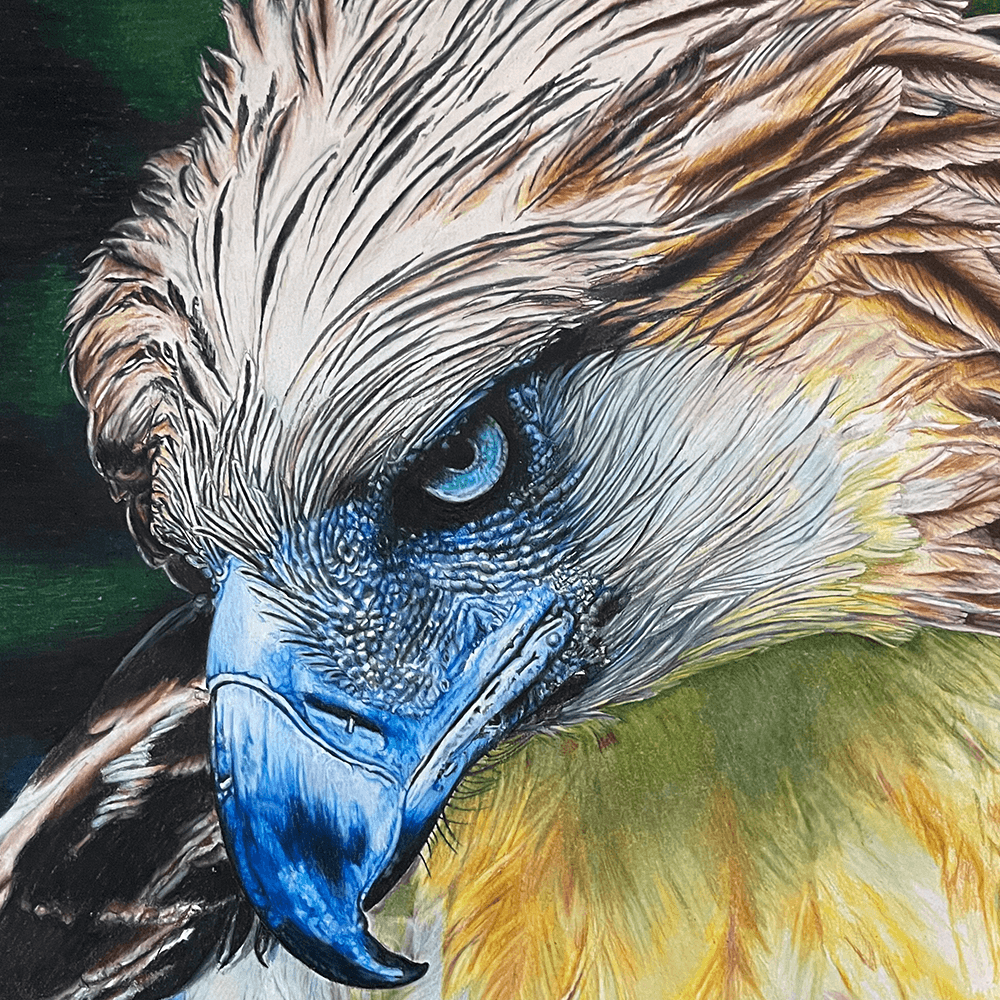
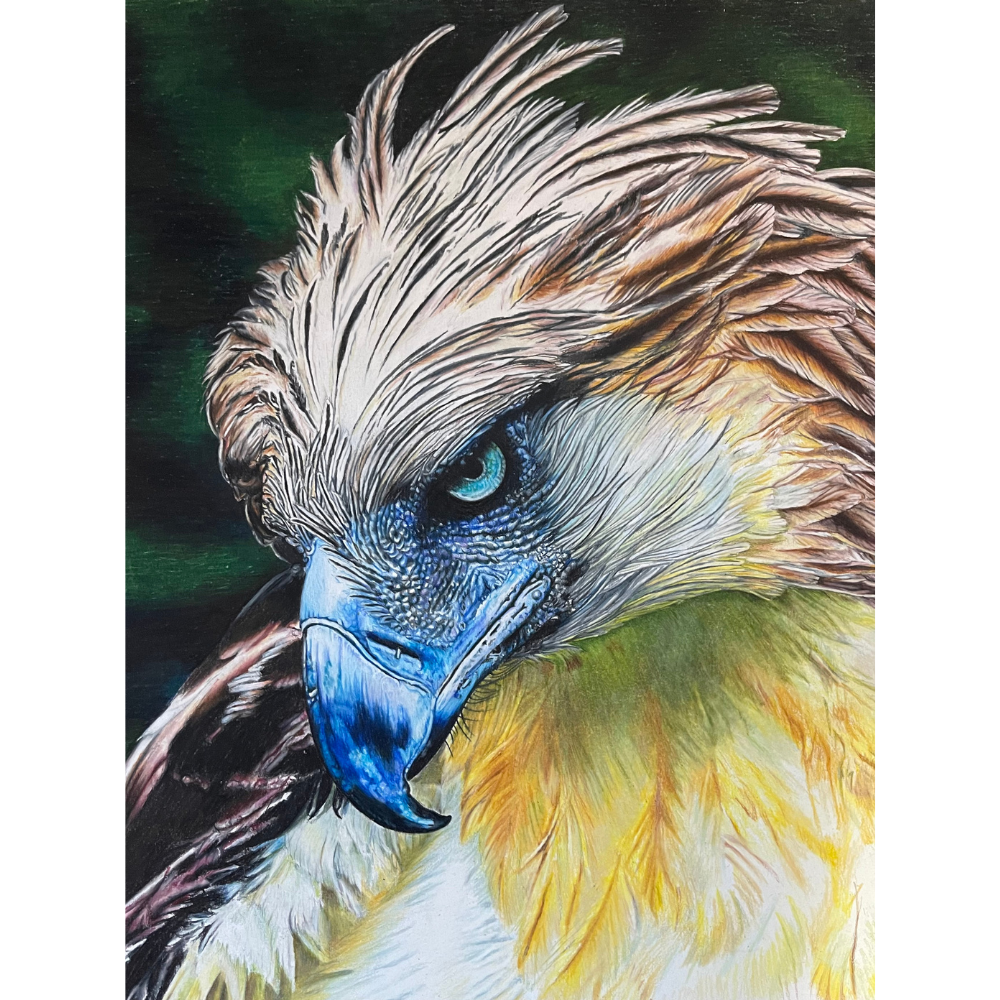
Then comes the heart of her process, and it’s here that Claire’s approach reveals her philosophy as an artist. “I start at the eye and work my way out,” she says. “I feel like I can never be too detailed, and I can never be too big.” Beginning with the eye isn’t just a technical choice, it’s about establishing a connection first. The eye is where personality lives, where the animal’s spirit becomes visible. By starting there, Claire ensures that every piece is grounded in the life force of her subject before she moves outward to build the body around it.
This commitment to detail is extraordinary. Each piece requires 40 to 60 hours of work, and Claire approaches every element with the same intensity. “I look at making every scale or every feather as 100% accurate as I can,” she shares. She utilizes tension points throughout the composition, creating visual interest and guiding the viewer’s eye throughout the landscape. When asked about the completion after such intensive work, reflects that “In the end when you see it all finished, it’s a great feeling.” She’s nailed down her process over decades of practice, and her love for this painstaking style shines through every stroke.
Most Challenging Aspect?
What’s perhaps most remarkable about Claire’s work isn’t what she finds challenging, it’s what she doesn’t. Unlike many artists who struggle with doubt or creative blocks, Claire has found her rhythm. She’s refined her process to the point where the work itself flows naturally, even when it demands dozens of hours of intense focus. The challenge isn’t in starting, it’s in maintaining that level of precision and attention for every minute detail that most viewers will never consciously notice but will absolutely feel in the finished piece.
This dedication to accuracy stems from Claire’s deep respect for her subjects. Having worked closely with animals through teaching them, training them, and studying their anatomy, she approaches each drawing as an act of honoring the creature before her. The challenge is living up to that standard she’s set for herself, ensuring that every piece does justice to the animal’s reality.
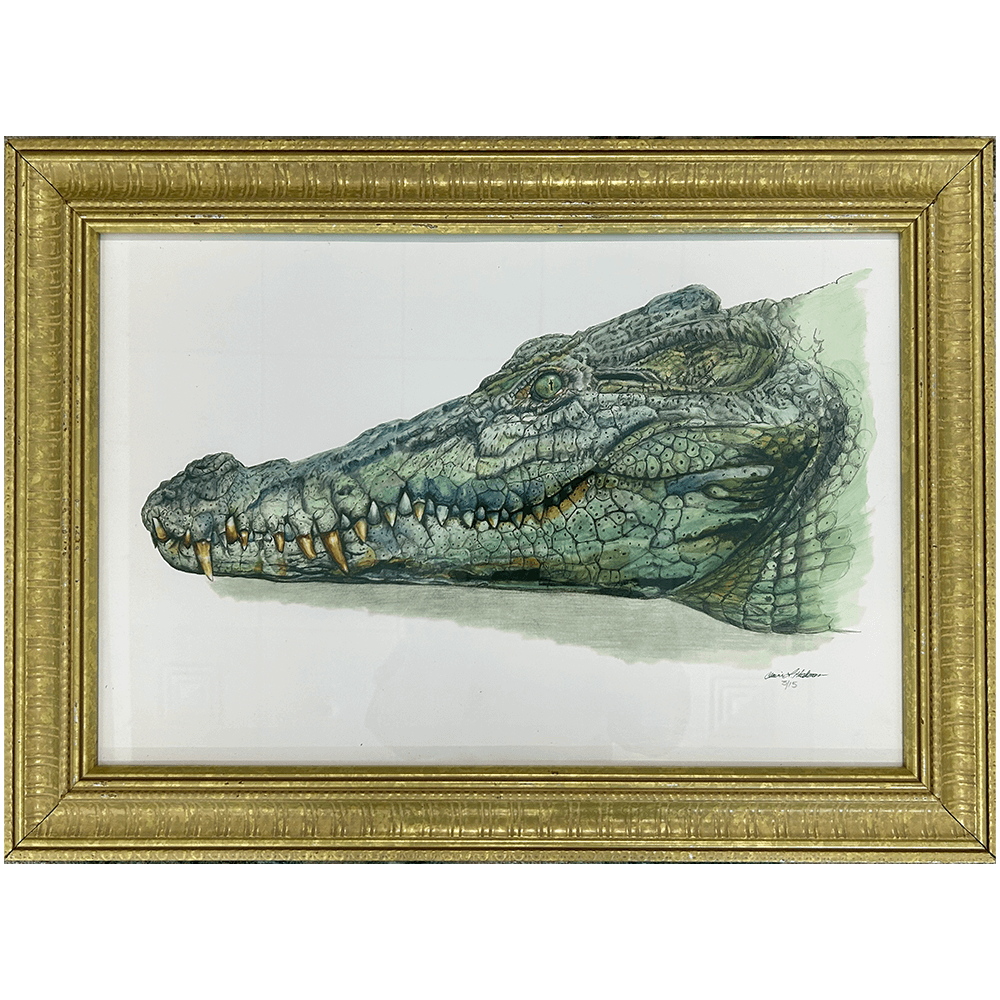
Female Saltwater Crocodile
Among Claire’s body of work, her “Female Saltwater Crocodile” holds special significance as the piece that launched her “full reptilian mode.” But what makes this drawing particularly meaningful is the context in which it was created. “Back when I was instructing at school, it gave me a lot of time to actually draw with my students,” Claire recalls. “I showed them this is my process, and I was drawing along with them, and they could see I knew what I was doing and I was very passionate about what I was teaching them.”
This wasn’t just for demonstration’s sake, it was teaching through authentic practice. By working beside her students, Claire showed them what dedication to craft looks like in real time. She combined ink with watercolor and pencil, building up layers of texture and tone that brought the massive reptile to life on paper. The piece became a turning point, crystallizing her focus on the creatures she’d come to know so intimately at Gatorama.
Claire’s love for reptiles also extends beyond the canvas. She owns an alligator tooth from her favorite alligator at the zoo, a physical connection to the animals that changed how she sees and creates art. That tooth isn’t just a souvenir, it’s a reminder that knowing your subject personally transforms how you render it on paper.
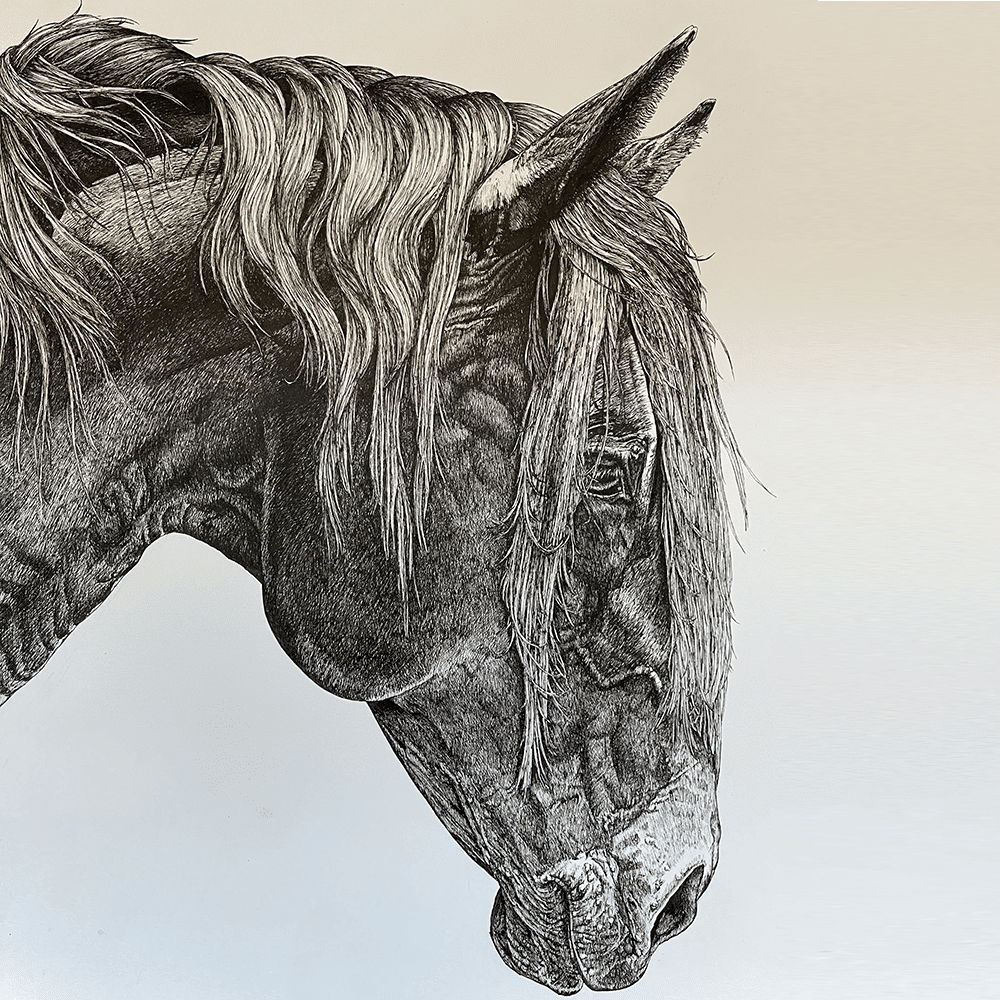
Stallion
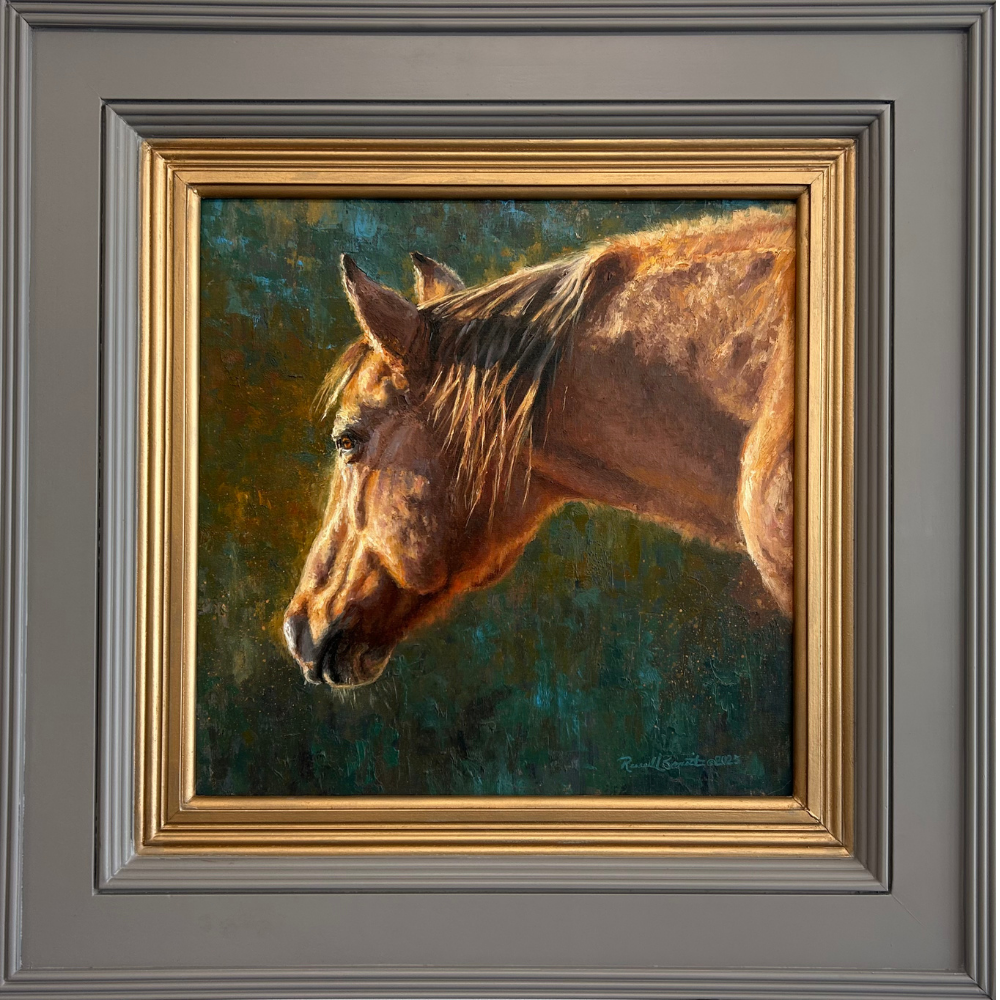
The “Stallion” drawing showcases Claire’s ability to channel the same intensity when portraying other animals too. “When I was a barn manager a few years ago, there was this beautiful stallion—I love him to pieces,” she shares with unmistakable affection. When she saw a striking photograph of him, she felt called to draw him, pulled by both emotional connection and visual appeal.
Anyone who has spent time with horses understands the profound bond that can form through a connection built upon daily rituals, mutual trust, and countless hours of quiet companionship. Horses have a unique way of imprinting themselves on the people who care for them, and riders and barn workers carry these relationships long after their time in the stable ends. This piece demonstrates something essential about Claire’s work: technical mastery alone doesn’t create art that resonates. The combination of knowing the animal personally and being captivated by the visual challenge is what elevates her drawings from impressive renderings to pieces that carry genuine presence. The “Stallion” artwork holds not just accurate proportions and perfect detail, but the memory of Claire’s relationship with this animal, the hours spent caring for him, the particular way he carried his head and shifted his weight, and the personality behind his eyes. It’s a portrait that only someone who truly knew him could create.
Unexpected Reactions
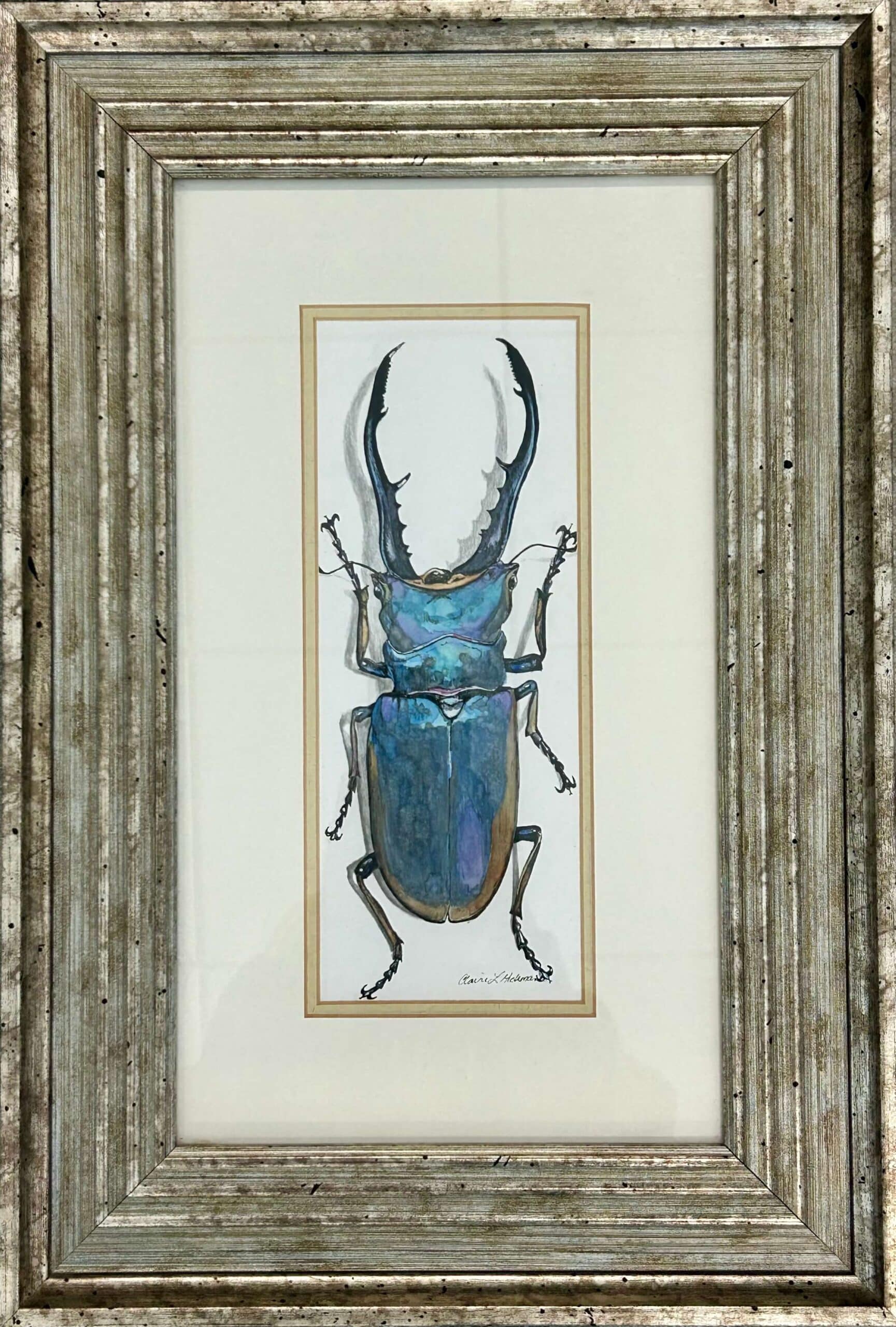
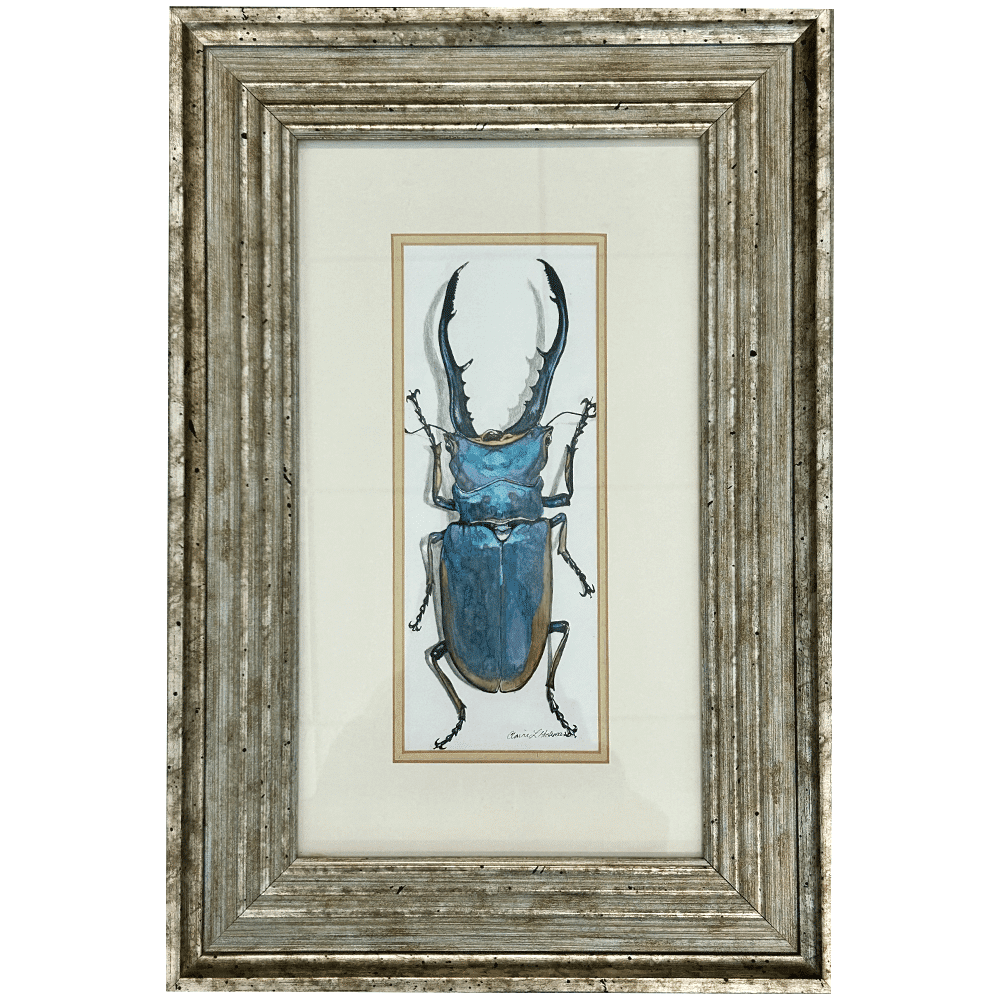
When asked about unexpected reactions to her work, Claire’s answer reveals something fascinating about how scope transforms perception. “People really like my insects,” she says, noting that these pieces draw particularly engaged viewers. “I’ve had a lot of people approach me and have really deep conversations with me about them.” Her insect drawings attract entomologists and scientists, people who recognize not just artistic skill but profound observational awareness.
What makes these pieces so compelling is how enlargement changes our relationship with the subject. By rendering insects at a substantial scale, Claire makes viewers see these creatures differently. The intricate patterns and the delicate structures create a new perspective for the viewer. Her insects demand attention and respect, transformed from background elements of daily life into beautiful works of art.
The Artist Behind the Work
When asked what flavor of ice cream she would be, Claire doesn’t hesitate: “Pistachio.” Her reasoning is characteristically thoughtful and revealing. “I like cool colors, it’s green, I like the flavor, and it’s a little nutty.” Her answer being methodical and grounded in specific preferences perfectly captures Claire’s artistic sensibility. She knows what she likes, she understands why she likes it, and she’s comfortable being exactly who she is.
The choice of pistachio, with its unique color and distinctive taste, mirrors Claire’s own path. She didn’t follow a conventional artistic trajectory. She taught art, trained alligators, and managed a horse barn, all while steadily refining her ability to capture the natural world with extraordinary precision. Like pistachio ice cream, Claire’s journey is a little unexpected, distinctly memorable, and absolutely authentic.
Art That Lives Where You Live
At Equine Instincts, we join collectors with artists whose work carries depth and connection. Claire Hickman’s drawings embody patience, precision, and profound understanding for her subjects. Each piece is an invitation to see animals the way Claire sees them. Not as generic representatives of their species, but as individuals worthy of 60 hours of unwavering attention. Explore more of her artwork online at equineinstincts.com or in person at our Pop-Up gallery outside of Indoor Arena 2 at the World Equestrian Center.