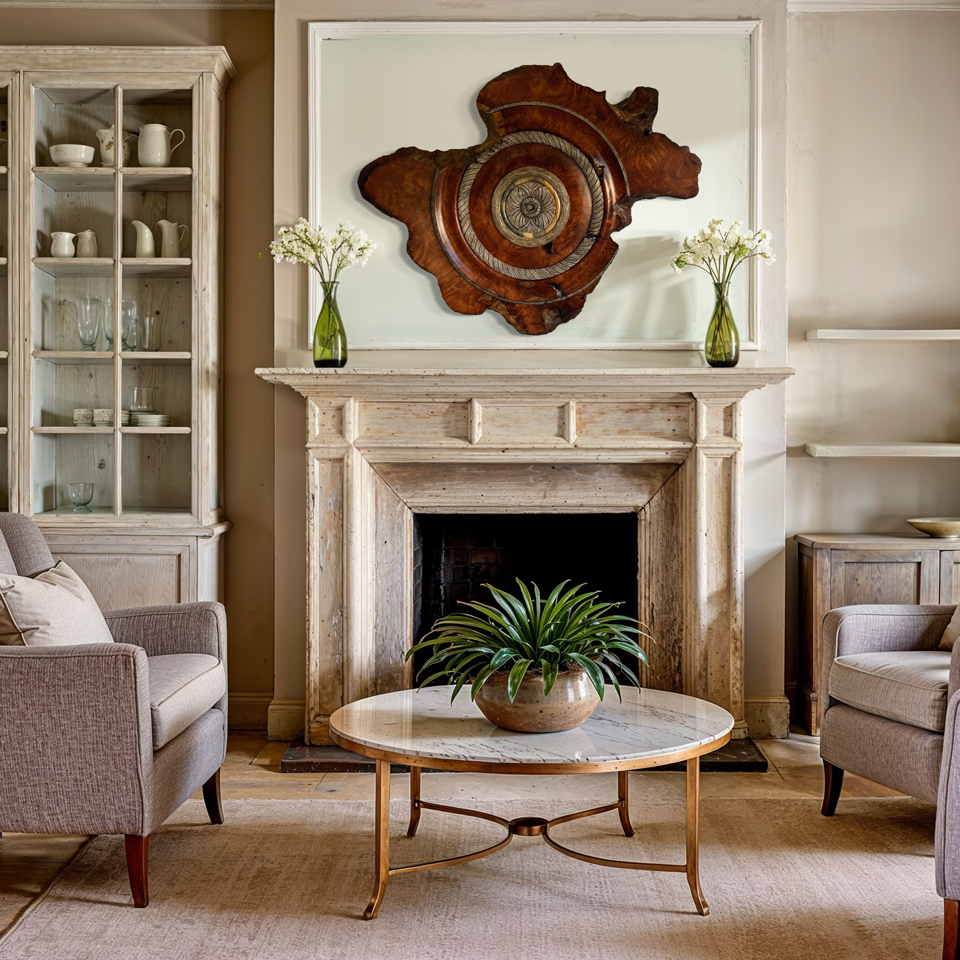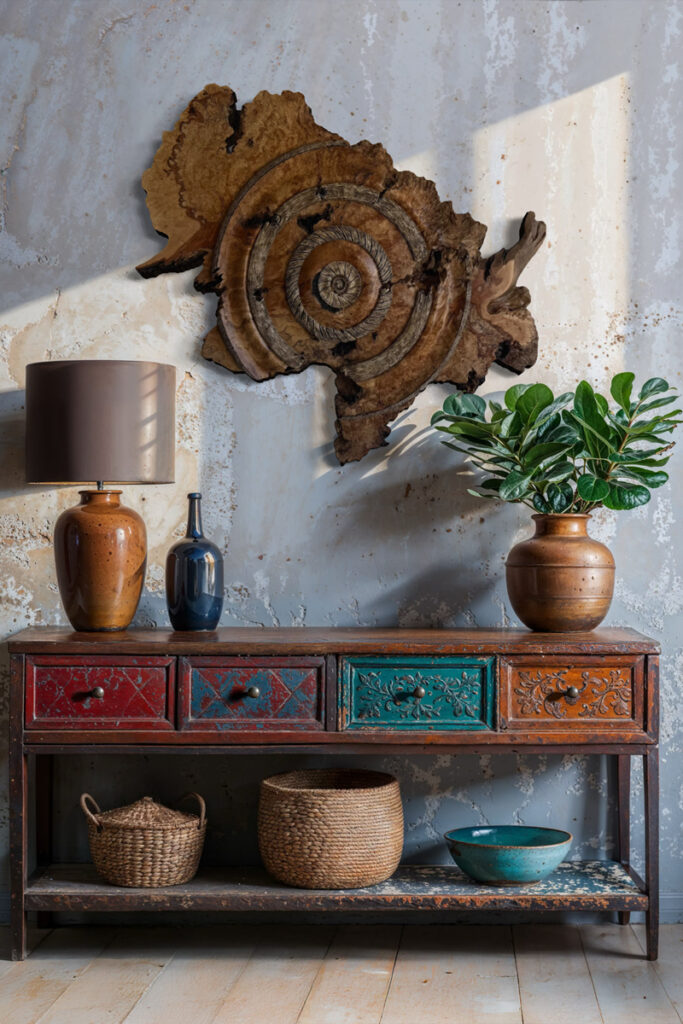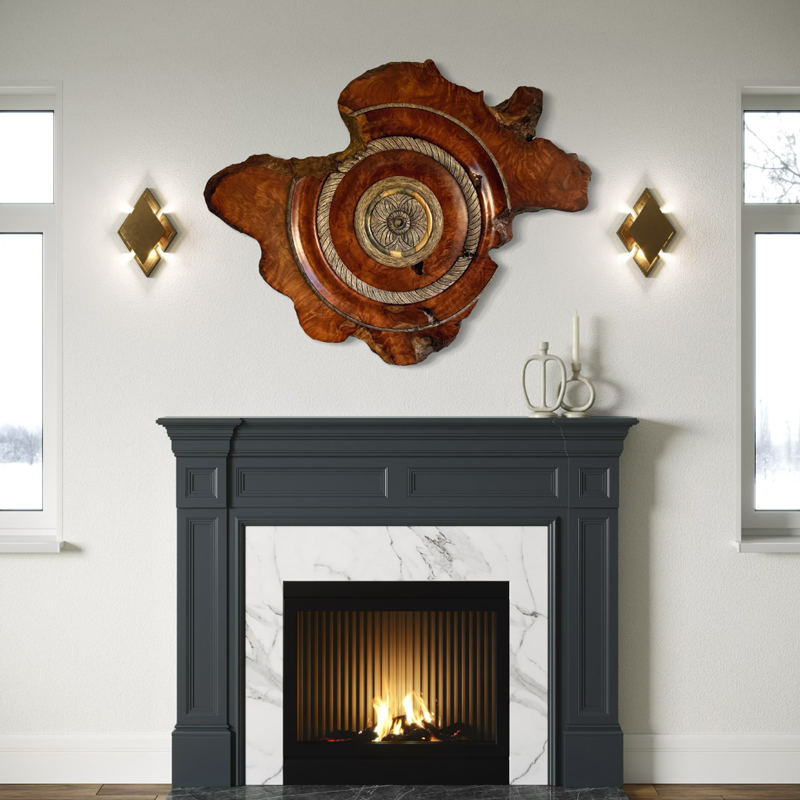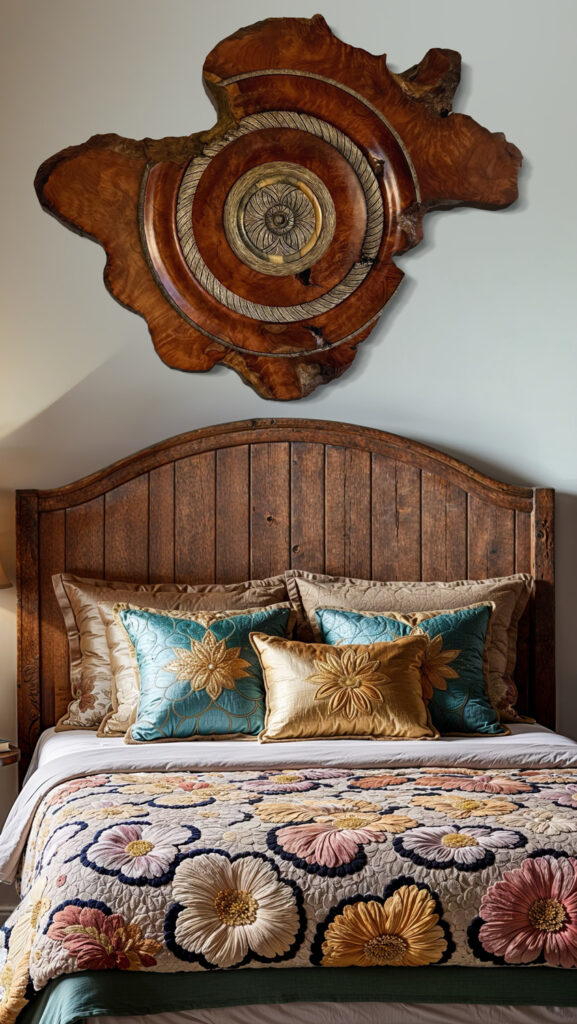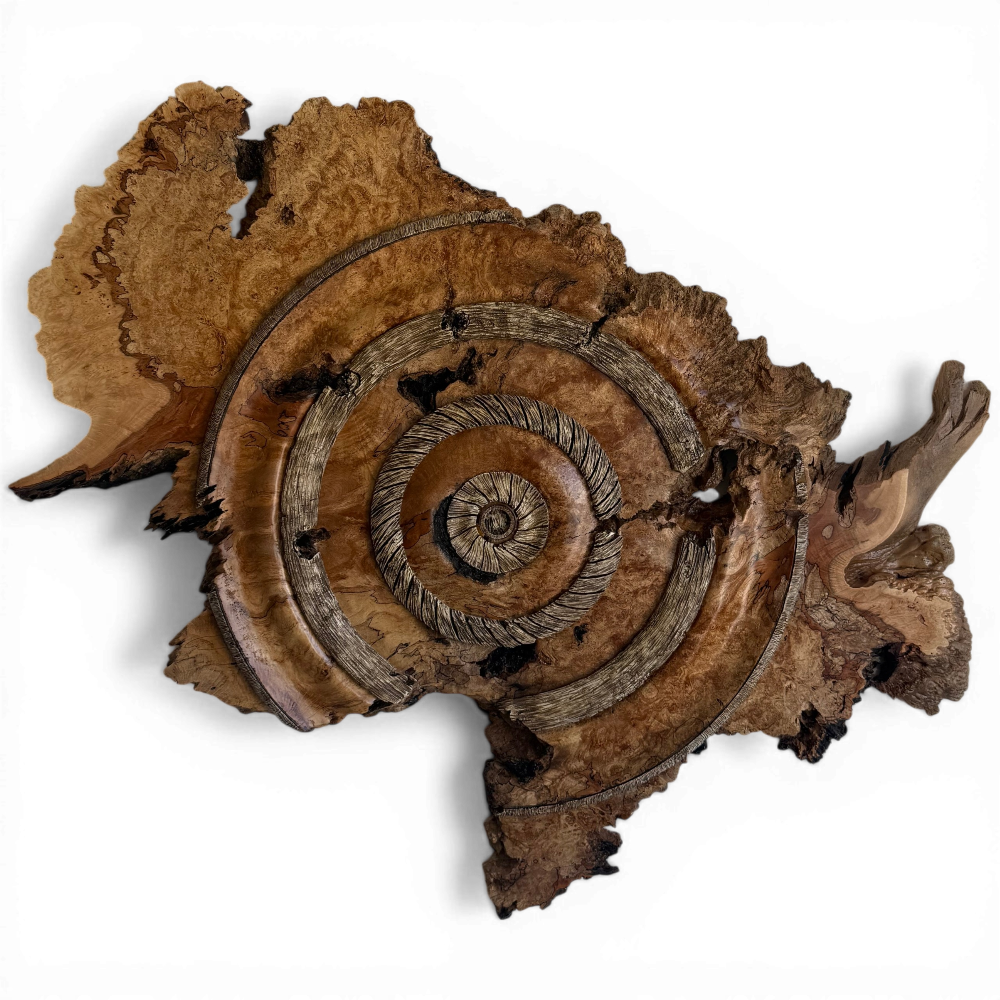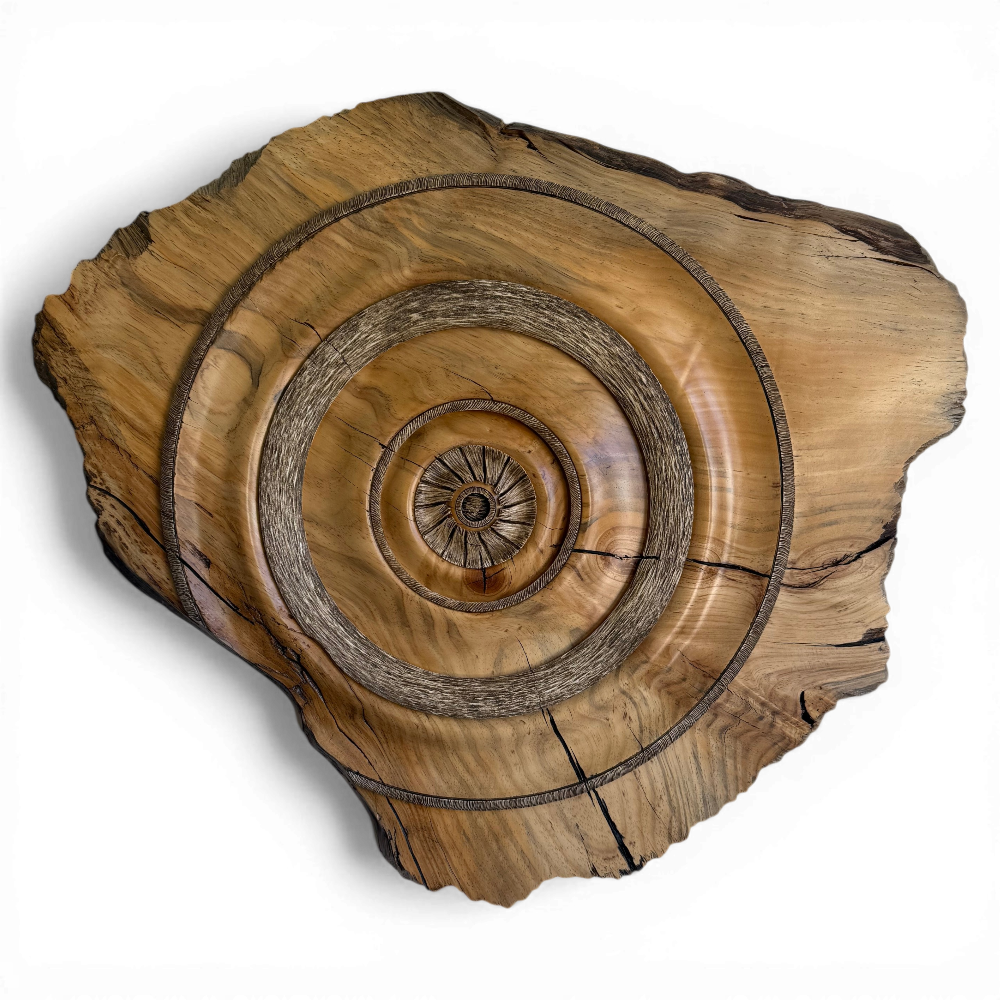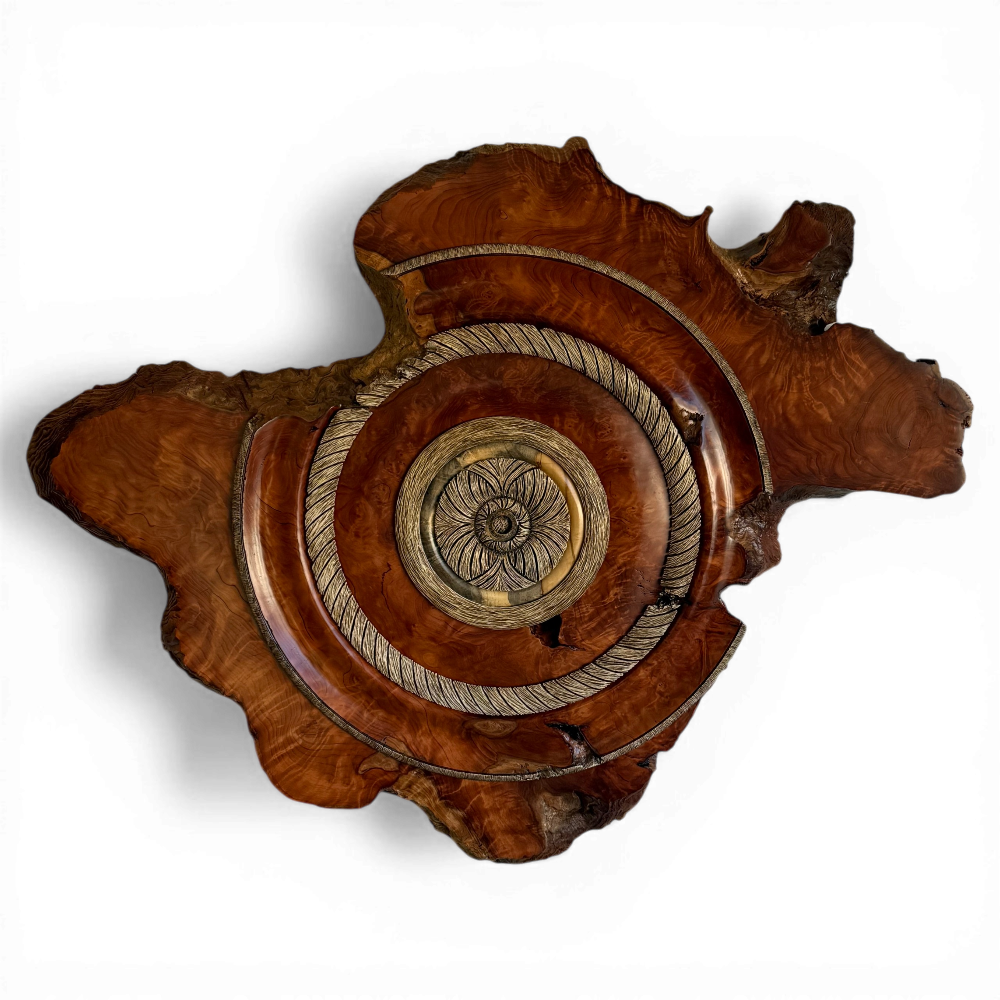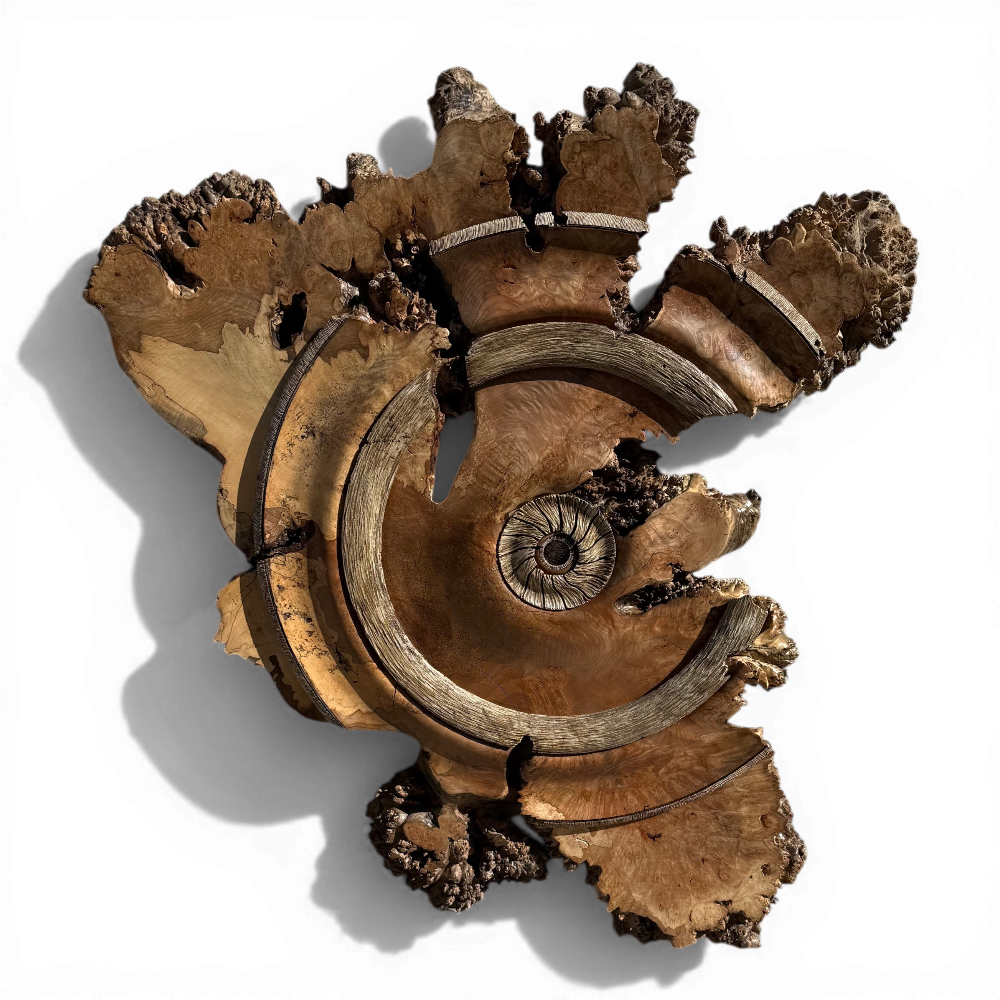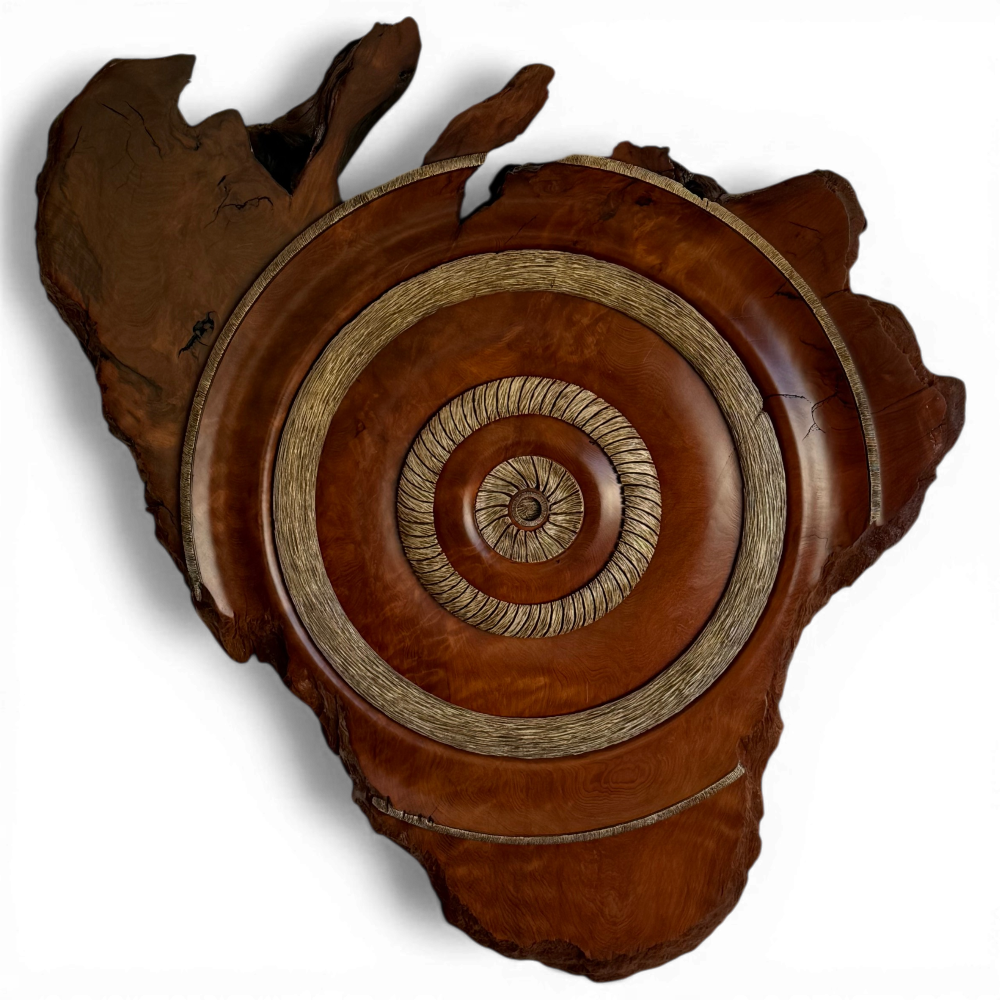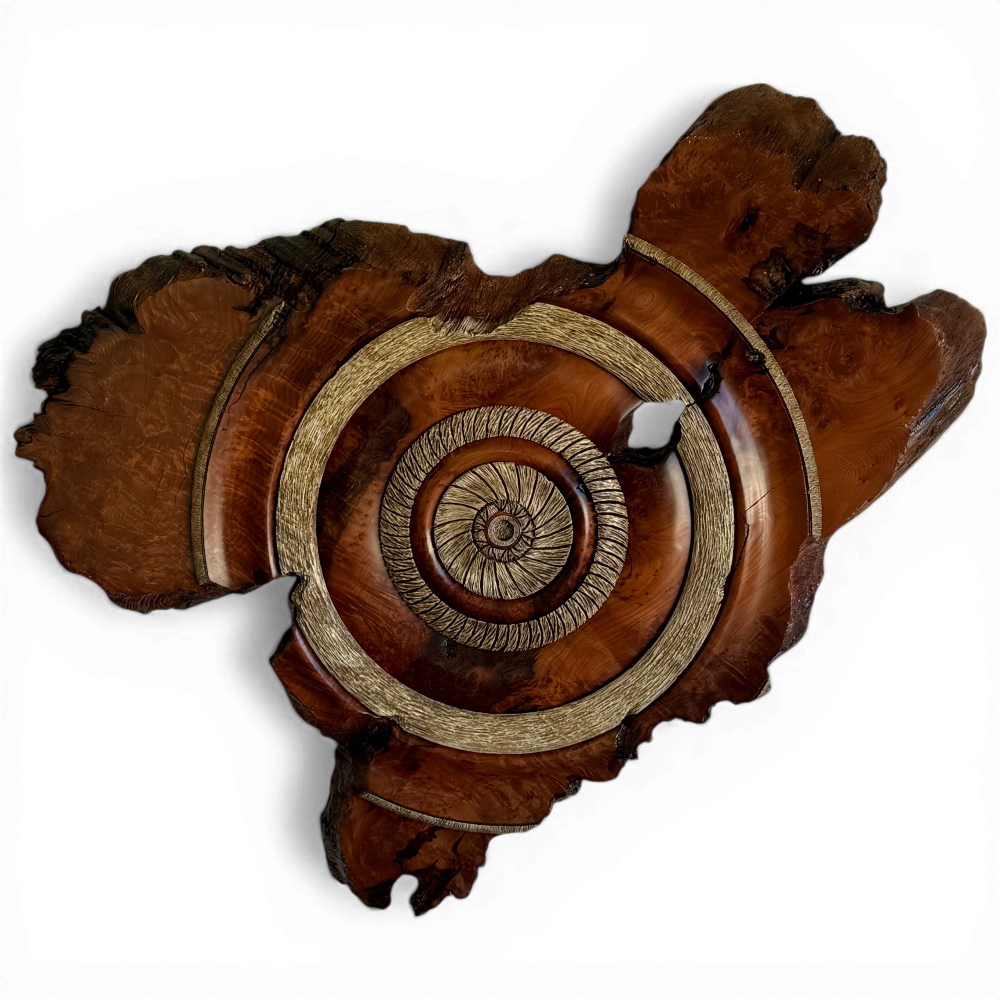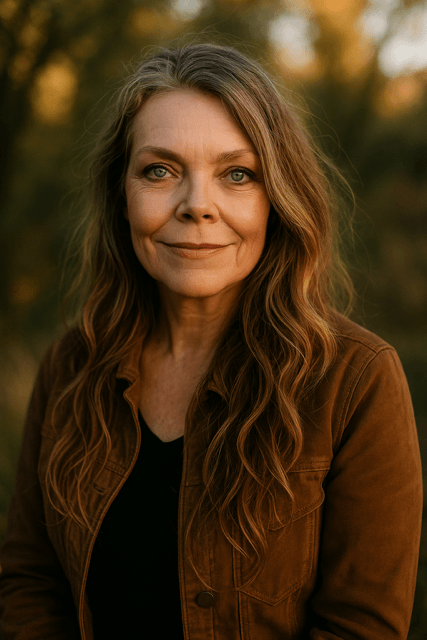
David Barkby was seventeen years old when he first learned what wood could do in the right hands, and he’s never stopped learning. What began in a cabinet shop at the age of 17, learning how to work with wood, quickly grew into a full career. Constructing everything from kitchens to furniture, custom builds, staircases, and eventually wood turning in the mid-1990s. But the moment that changed everything came at the History Meets the Arts show in Gettysburg, Pennsylvania, where a wall sculpture he had created promptly sold within fifteen minutes of the doors opening. “I figured I was on to something,” David notes. From that day forward, those unique wall pieces became his calling.
For David, it always starts with the wood. Not a sketch, not a plan, just a burl, raw and full of possibility, waiting to reveal what it wants to become. It’s an approach that has led to wall sculptures unlike anything else in the craft. David sources whole burls and slabs them himself because the way he reads and cuts the wood is fundamental to the final piece. After slabbing, the wood is air-dried and kiln-dried, a process that can take anywhere from six months to three years, depending on the species and current moisture. Next, the wood is mounted on the lathe for shaping and turning, then moved onto the last stage of hand-carved detail work.
Once the piece is in its final form, one of the most important steps in the process takes place. David applies 12 to 15 coats of lacquer, but only after drying each piece to its lowest possible moisture content. For Buckeye burls, this could mean as low as 6%, and for Redwood, around 9%. Once the wood’s cell structure fully breaks down at that level, it can absorb and release airborne moisture evenly without fear of damaging the wood.
When looking at his medium, wood selection is an artistic decision as much as a practical one. David avoids burls that are strictly round or oval, seeking the irregular forms that give his work more visual interest. He also considers how a piece will shimmer from across a room, thinking about presence and pull long before the lathe ever runs. However, finding these quality burls, particularly Buckeye, has grown increasingly difficult in recent years, making a well-curated selection all the more precious.
When looking back throughout the years, David said his earliest wall pieces drew inspiration from Roman shields: solid, symmetrical, commanding. Over time, he moved toward more three-dimensional forms with undercuts and asymmetrical shapes that reward a slow, exploring gaze. His scale has grown to match that ambition as well. From an original 24-inch lathe swing to works spanning 92 inches, and even a ten-foot piece that required him to cut a track through his concrete shop floor to accommodate it. It’s this defining detail of who David is, an artist who reshapes the environment to fit the work, never the other way around.
The result of all of David’s evolution encourages his favorite reaction from collectors, stating, “I like the immediate wow effect when they look my pieces.” That feeling is nearly universal among first-time viewers, who have nothing to compare his work to. But what moves him most is not the initial response; It’s also the lasting impression that his work leaves. He once had collectors lose his contact information only to recognize his pieces fifteen years later without a second’s hesitation. That kind of resonance, the piece that refuses to leave someone’s mind, to David, the truest measure of what his work has accomplished.
Looking closer at the personality of the artist behind the work, we asked David what flavor of ice cream he would be. The response was, “I’ve never been asked that, or even anything close to that,” he laughed. After a moment, David landed on “Nothing boring as far as ice cream goes. Something layered, chocolate chips, caramel, multiple flavors together. It is an entirely fitting self-portrait for a man who has spent four and a half decades refusing to make anything predictable.
Explore more of David Barkby’s artwork online at equineinstincts.com or experience them in person at our gallery inside of Indoor Arena 2 at the World Equestrian Center.