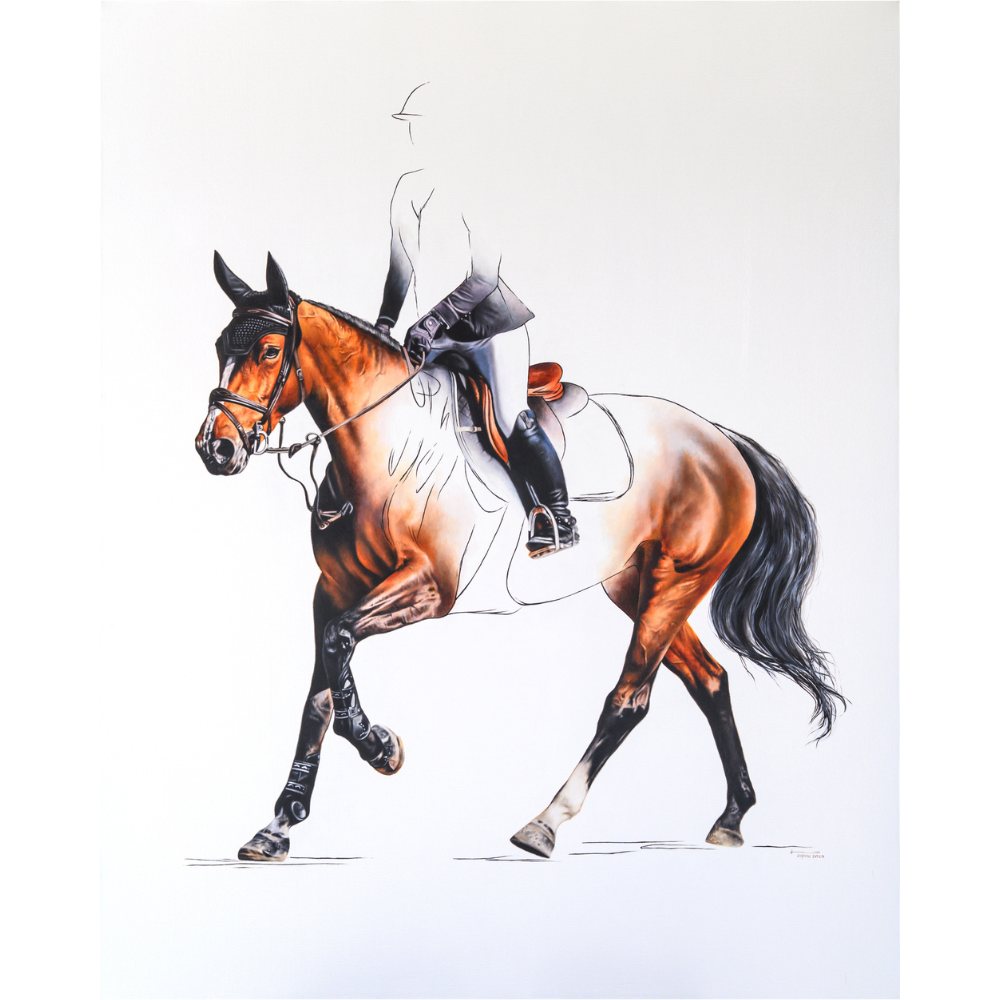
The first time Tatiana truly understood horses, she wasn’t riding one. She was watching her brother, who has cerebral palsy, settle into the saddle at an equine therapy center. Something shifted in that moment. The way she connected with the horse’s energy, as if it understood exactly what was needed. “When my brother rode the horse, it was very calm and you could feel that connection and energy,” she remembers. In that moment, she felt the unmistakable pull of what would later become her calling.
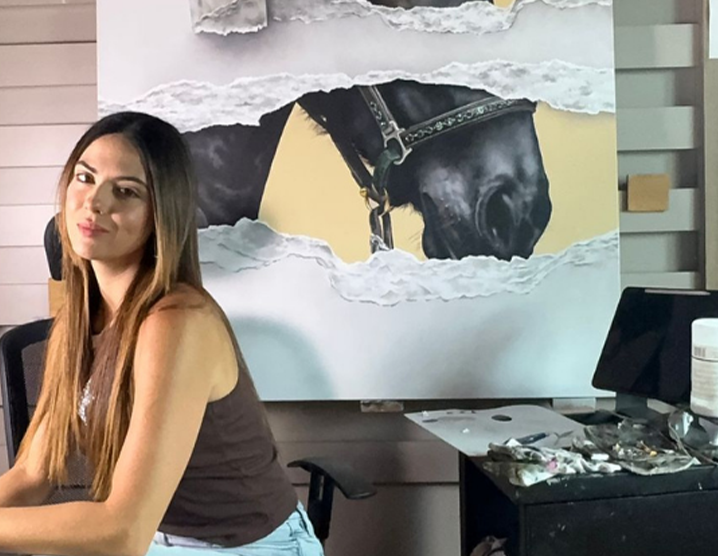
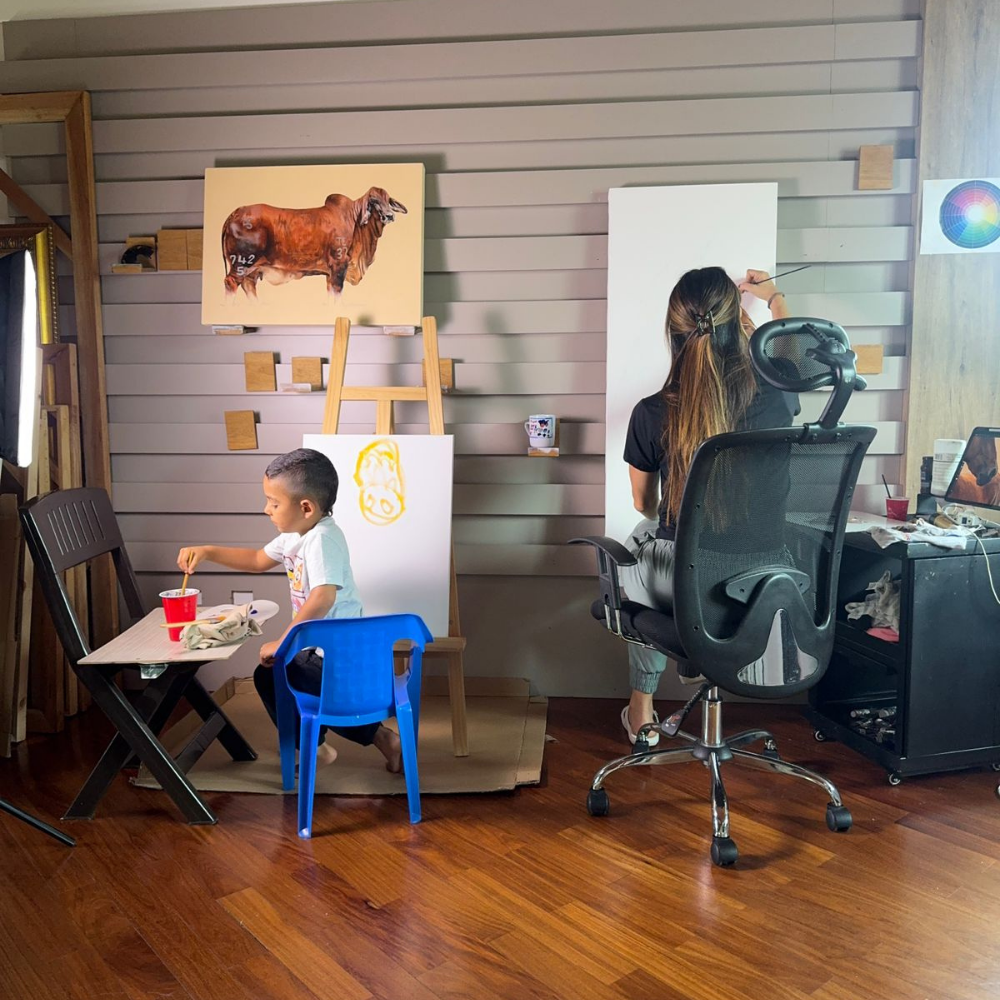
Years later, Tatiana happily found herself painting in the studio, a talent she had inherited from her mother. Having a lifelong passion for creating art, Tatiana knew this was a creative way to express her emotions and experiences to the public. When she decided to create her first horse painting as a birthday gift for her husband, that equine connection came flooding back. It wasn’t just about capturing the physical beauty of the animal, it was about trying to translate a certain feeling and essence onto canvas. That first painting, created thirteen years ago with no formal training, opened an outlet Tatiana didn’t know she’d been searching for.
An Unexpected Discovery
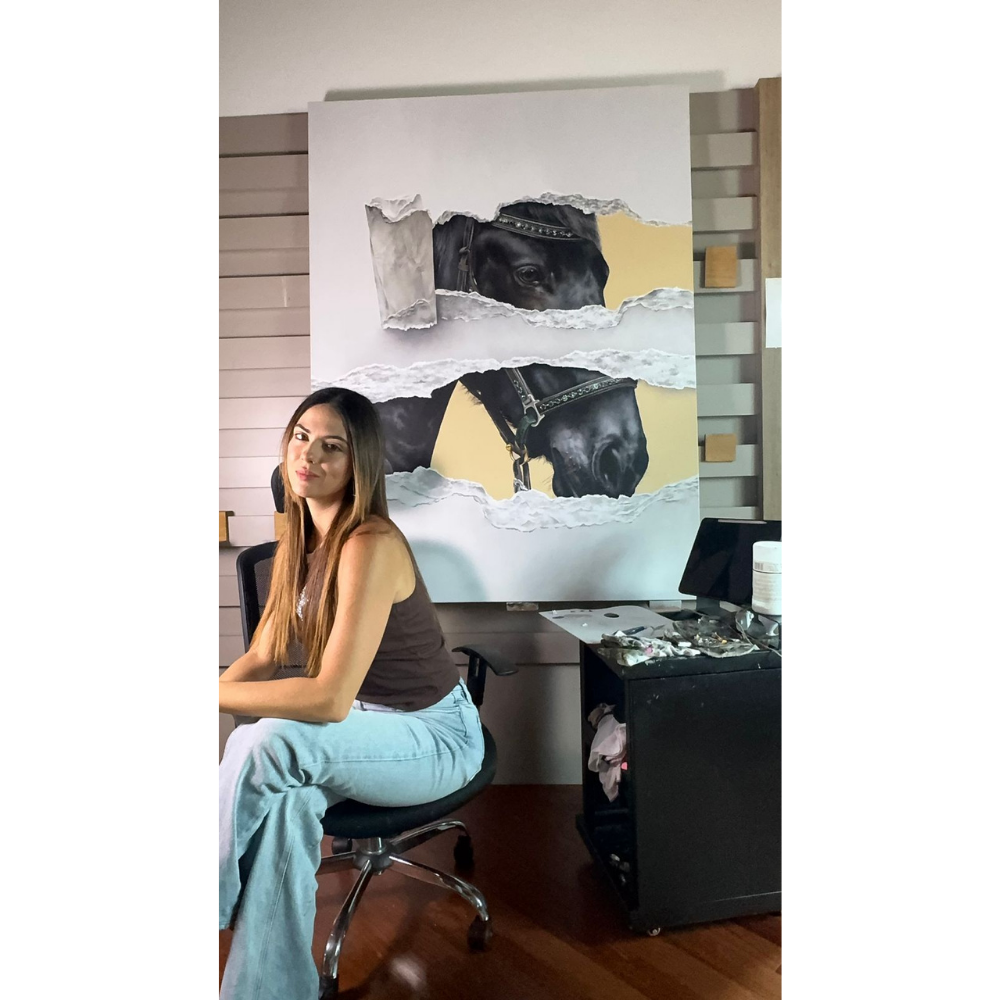
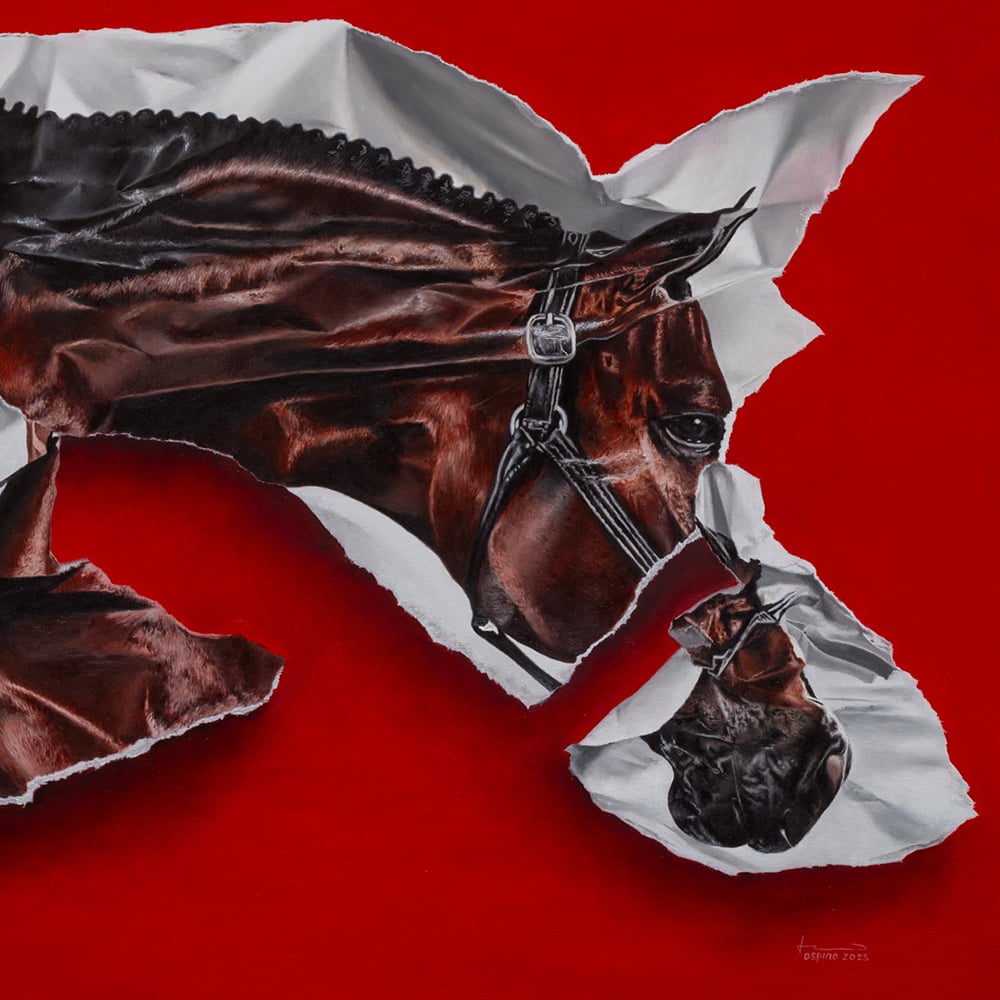
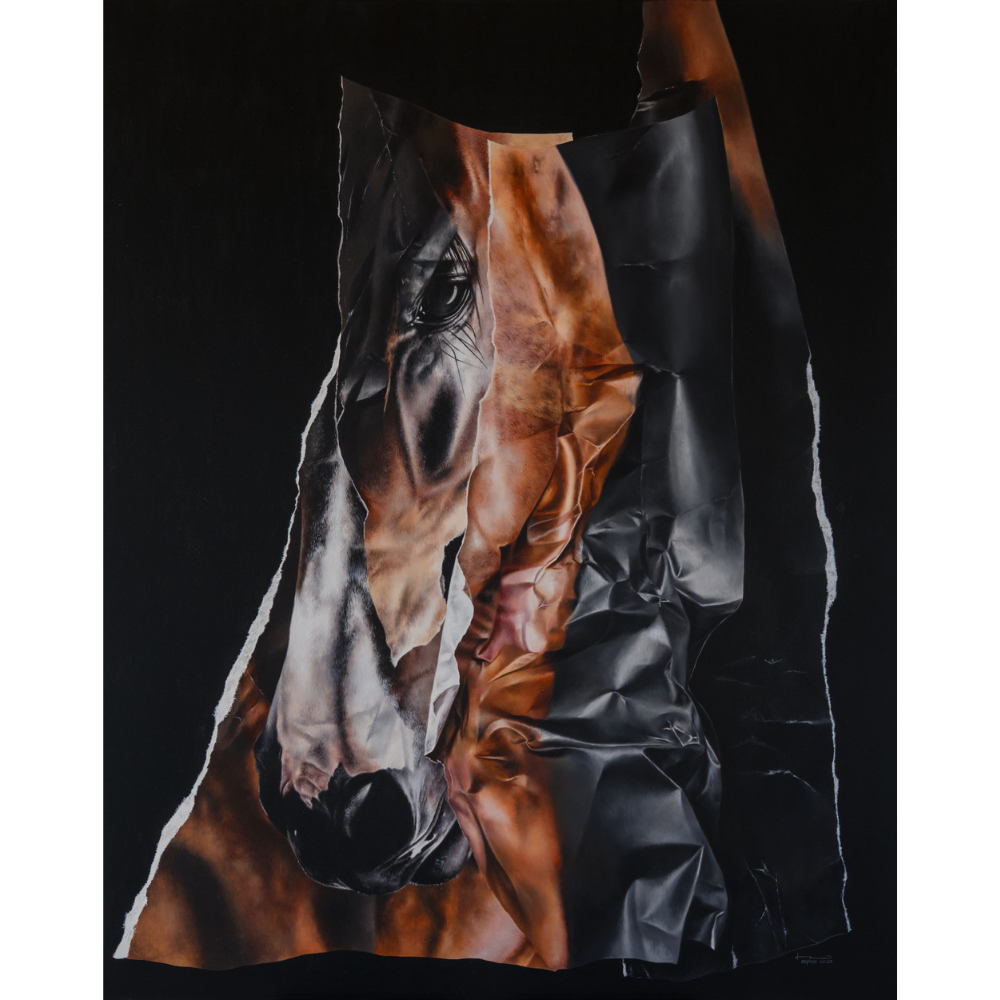
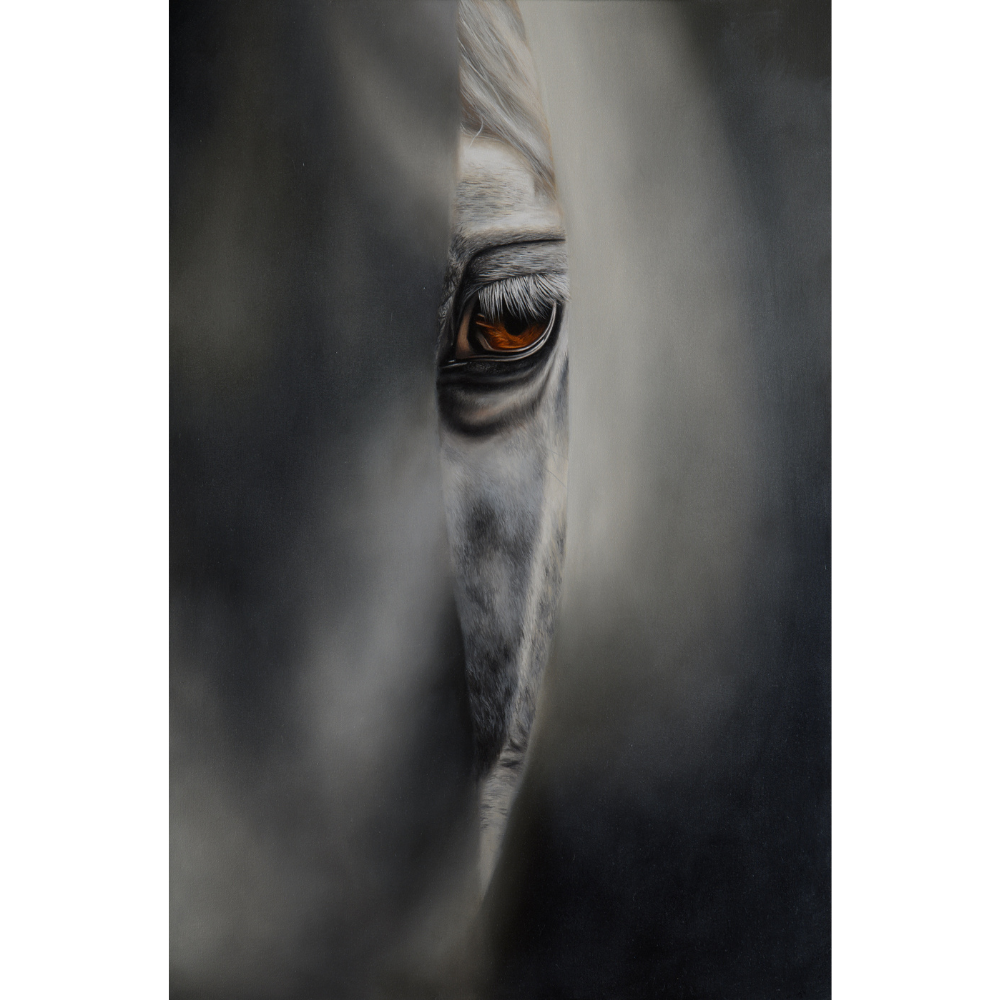
For years, Tatiana focused on traditional and hyper-realistic equine paintings, building her skills as an artist. Then in 2024, she found herself experimenting in her studio, playing with textures and effects. She started tearing and crumpling up her work, exploring how these damaged parts dramatically altered the pieces. Tatiana was inspired by the way the folds caught light, how the tears created unexpected patterns, and the way something damaged could still be beautiful. She began exploring this technique more intentionally, but she wasn’t sure it meant anything beyond aesthetics. Then, two weeks after this creative discovery, her son was diagnosed with cancer.
How Art Becomes Meaning
As her family entered the most difficult season of their lives, those crumpled textures took on a meaning Tatiana couldn’t have anticipated. The scars, the tears, the way something could be broken and still hold together, it suddenly wasn’t just a visual technique. It was everything they were living. “I wanted to show in my paintings that even the beauty of life has scars. Everyone in the world has to go through this kind of experience,” she explains.
What had started as creative play became a visual language for resilience, with this discovery coming at exactly the moment she needed it most. Her son’s battle gave purpose to the technique that soon became her signature style. The fragmented surfaces weren’t just interesting anymore; they were honest.
What Does the Creative Process Look Like?
Tatiana’s process is entirely digital in its early stages. She starts by uploading a reference photo and begins sketching out the composition on her iPad. She uses the technology to create layers and form the base of what the final artwork will look like. But here’s where her approach becomes unique: she prints these images out and directly crumbles and tears her digital sketches. She experiments with how she manipulates the paper, studying how the creases interact with the subject beneath, where the tears fall, and how light plays across the damaged surface. She works the digital layers until the scars align with the story trying to emerge.
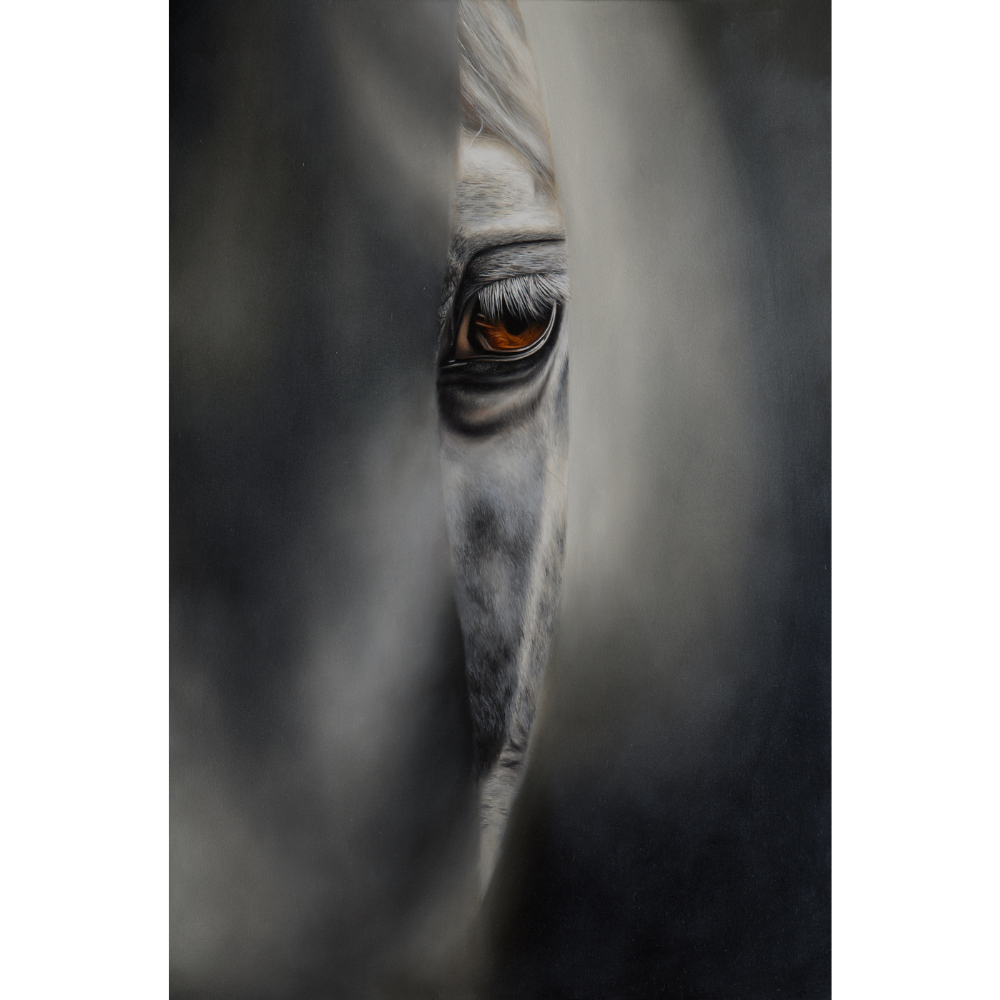
Once she has refined the vision, Tatiana moves to a canvas and begins the creation of the final piece. Her paintings are done in layers, each building upon the last. First, acrylics establish the foundation, recreating the sketch that she had made prior. But now, translating torn paper and creased surfaces to a two-dimensional flat surface. Then oils bring everything to life, adding the precise details that make it look like you can reach into the canvas. When creating her art, Tatiana explains, “I can let my mind fly and have creative freedom.” That freedom, that space to interpret and transform rather than simply replicate, is what brings her work to life.
The Collector Connection
What matters most to Tatiana isn’t technical approval, it’s the emotional response. “I want people to know the sense of the animal… the emotions in my work right now, I want the people to see the beauty in the scars of life.” Tatiana is painting for those who understand that we’re all connected through struggle and healing, that the cracks in our lives don’t diminish us but make us capable of holding more light.
Tatiana’s paintings invite you to spend time with them. The concepts run deep, and the layers of meaning reveal themselves slowly to anyone willing to look closely. Even Tatiana herself discovers new things in her work after it’s finished, picking up on elements and meanings that emerge only with reflection. She hopes the paintings continue to evolve in the minds of those who return to them, never quite finished revealing themselves.
Fragments of Strength
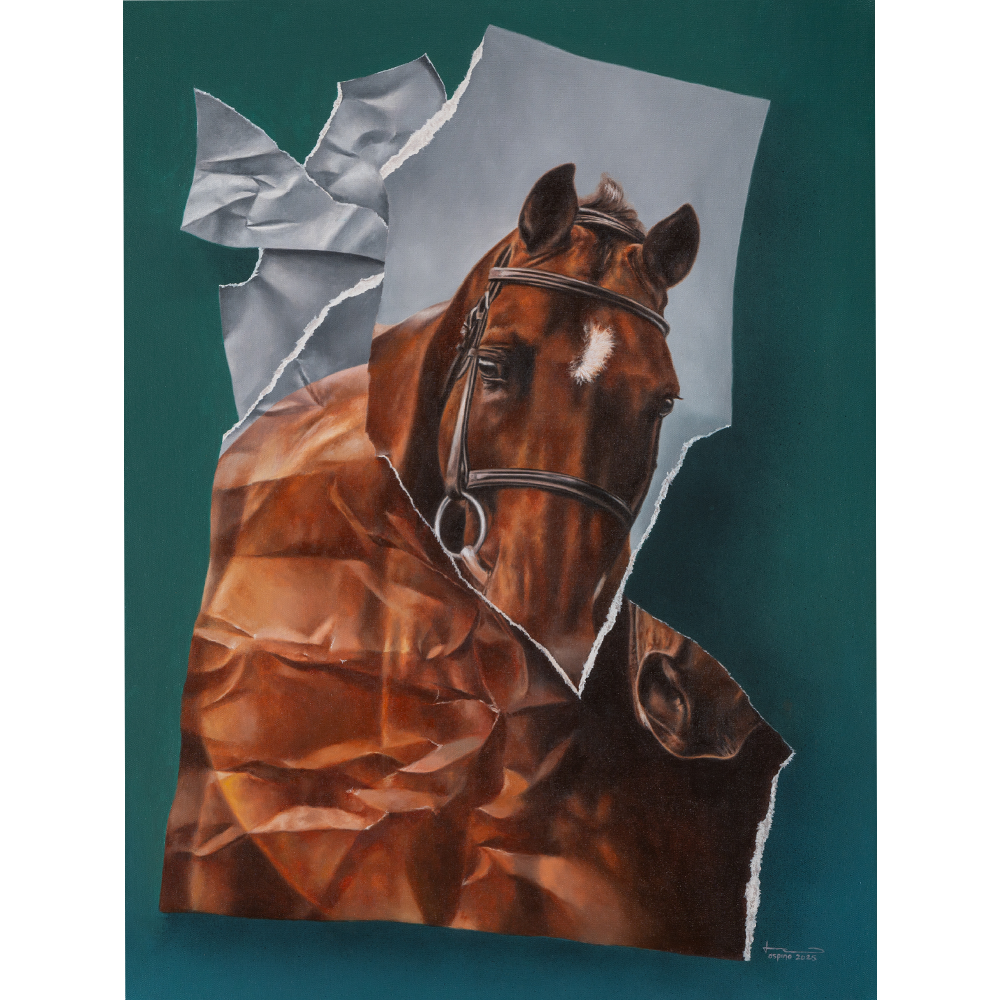
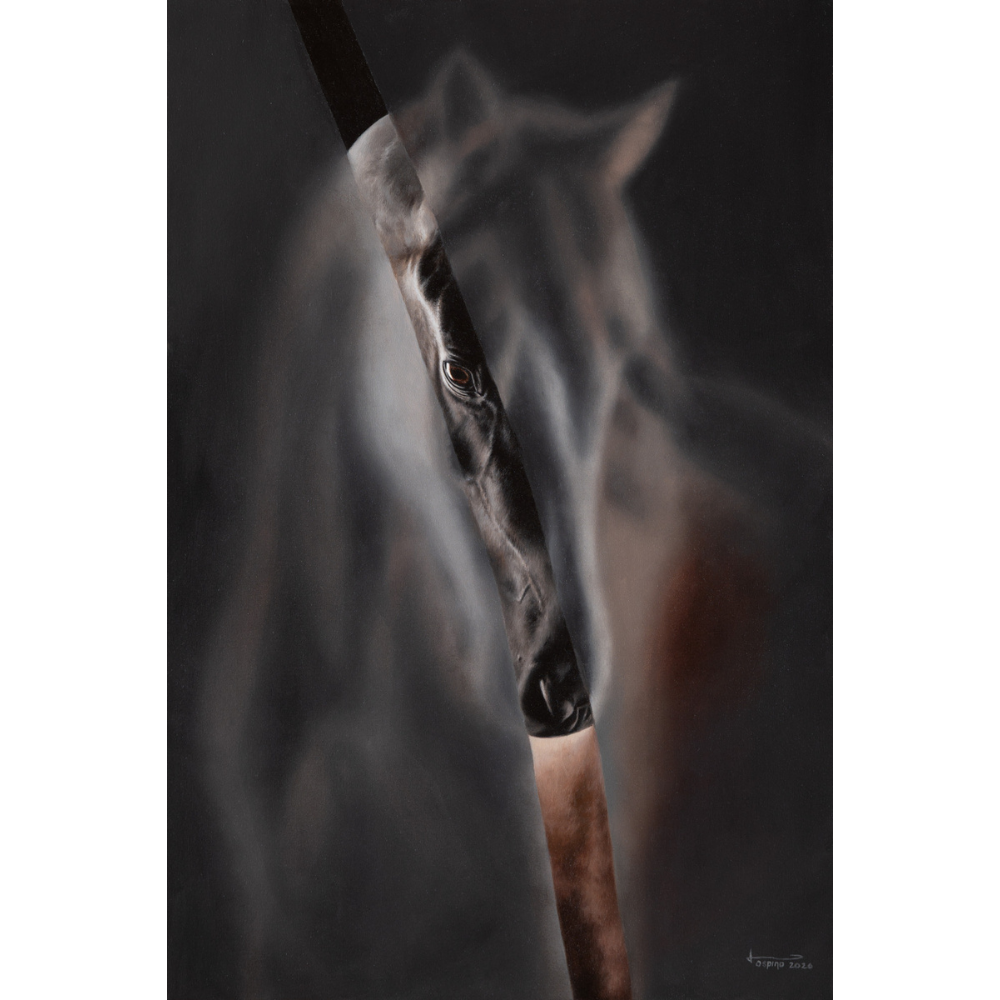
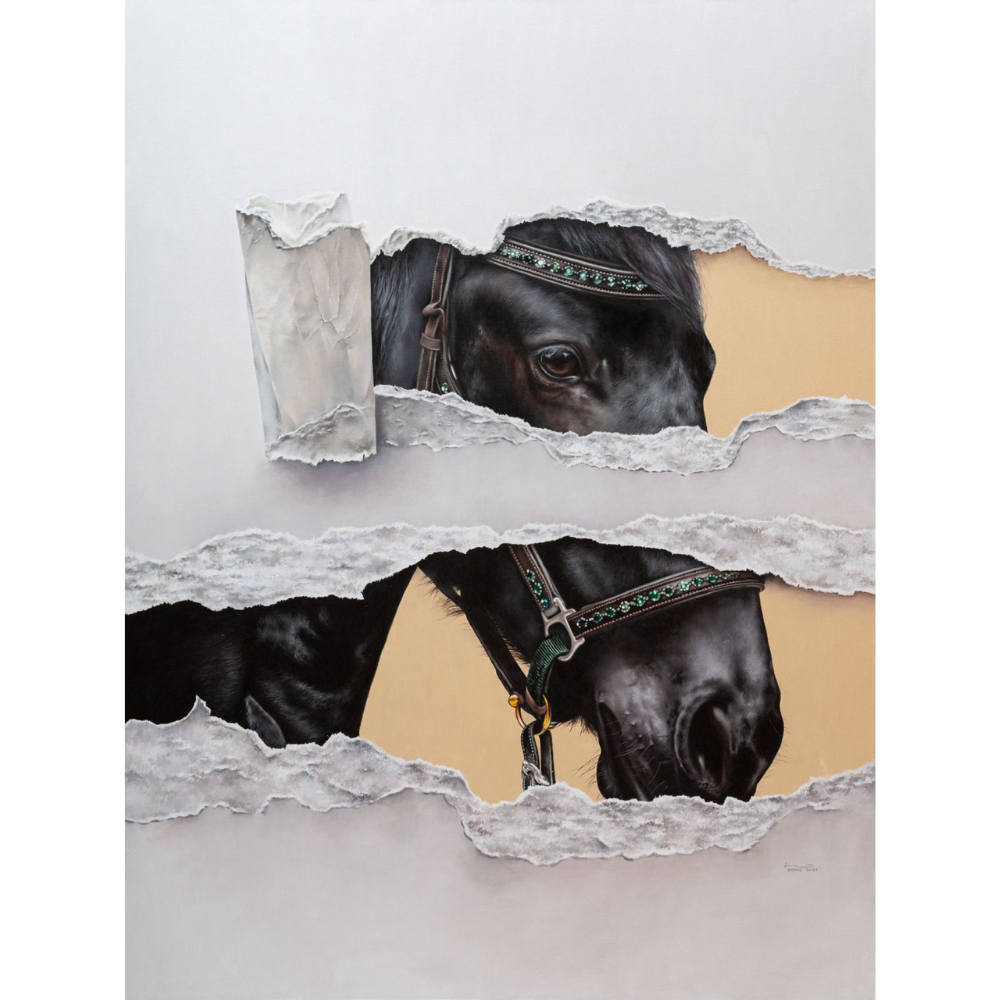
In the painting titled “Fragments of Strength,” Tatiana reveals how this discovery became essential. When reflecting on the time surrounding the creation of this piece, Tatiana explains, “In that moment it was the most difficult in my life,” remembering the diagnosis, the hospital, and her son undergoing treatment. “There was a big scare that I had in my heart. But I recognized the beauty in the fact that my family was all together. You always see the difficult or bad things in life, but when you finish that season, you can see the beauty. I had the beauty of being with my family and my support group during that time.” Now that her son is healthy and cancer is behind them, Tatiana can see even more love within this painting.
Everything she was learning about life got poured into this work. The fear and the love, the breaking and the holding together, the way the worst moments can also contain the deepest connections. “You need to see the beauty in the bad things,” she says, and this piece is proof that it’s possible. The fragmented, crumpled surface becomes a map of resilience, showing how something can be simultaneously broken and breathtaking.
Memory of Motion
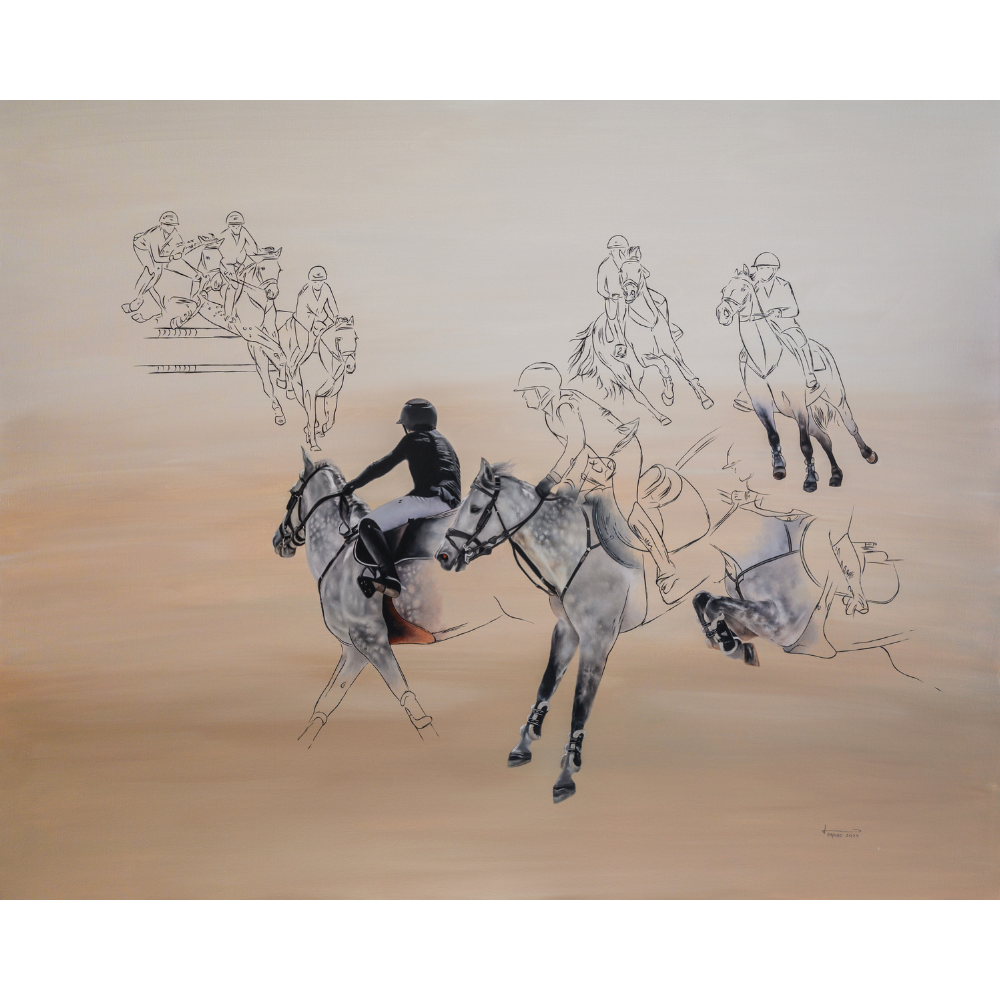
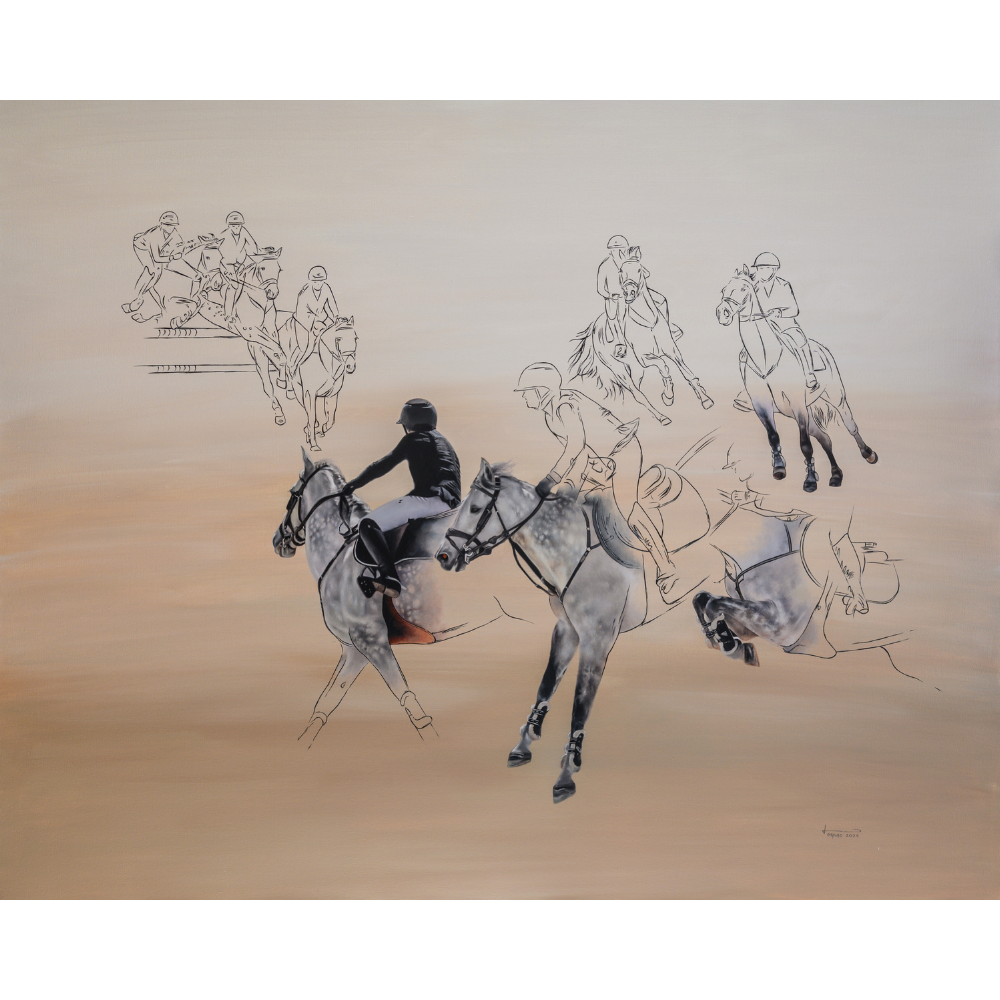
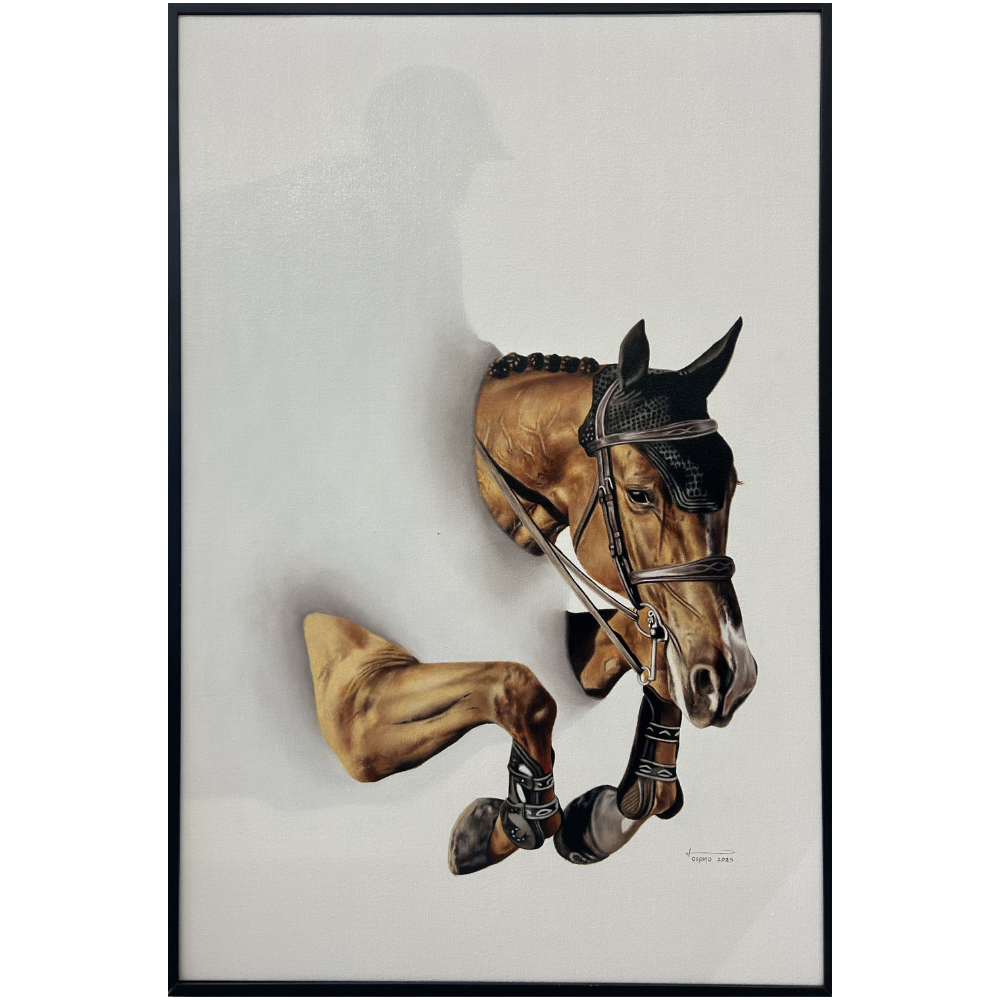
The painting “Memory of Motion” tells a different story, one about grace and those moments when everything flows and feels effortless. Tatiana describes this piece as capturing not just a single frozen instant, but the entire journey of a horse over a jump. From the approach, the suspension, and the landing. “It shows the complete arc of motion,” she explains. “It’s calm in a way that only comes after you’ve learned to trust the process.”
For Tatiana, this piece represents both her artistic journey and life itself. It’s about how to navigate obstacles before and after, not just the climactic moment of clearing them. The preparation, the commitment, and the follow-through. “In showjumping, in life, and in my art, you need to jump the obstacles. In some moments, you need to be calm in a situation so that you can see the obstacles and challenges in front of you.”
The Artist Behind the Work
When asked what flavor of ice cream she would be, Tatiana doesn’t hesitate: “Pistachio! It’s my favorite.” She knows not everyone shares her enthusiasm, thinking pistachio is the kind of flavor people either love or can’t understand at all. But that doesn’t diminish her affection for it one bit. She loves that it’s sweet, that it makes her happy, that choosing it is about joy rather than pleasing everyone else.
It’s a philosophy that connects to her art. Tatiana paints what she authentically feels, not what she thinks people want to see. She refuses to play it safe or copy what’s expected. Like choosing pistachio in a world of vanilla and chocolate, she’s drawn to what genuinely moves her, even when it’s unconventional.
Art That Lives Where You Live
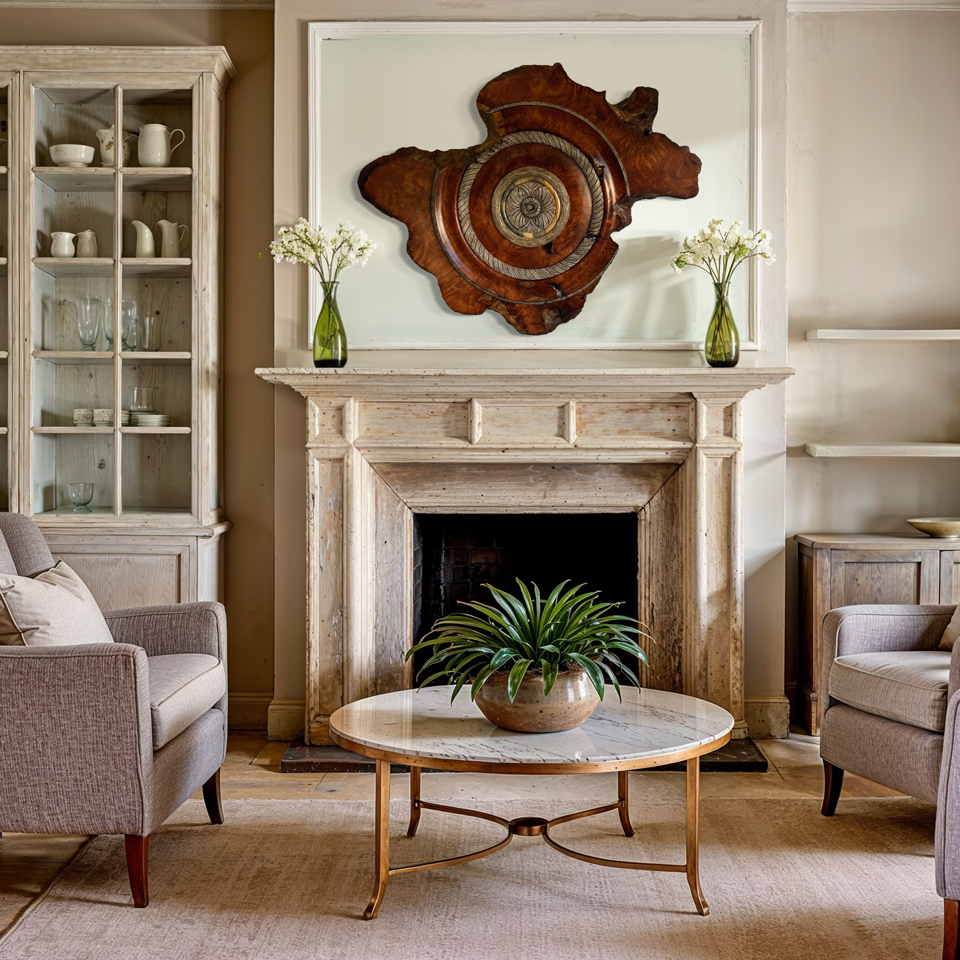
At Equine Instincts, we connect collectors with artists whose work transforms how we see both art and life itself. Tatiana’s paintings embody resilience and the profound truth that our scars can become our greatest sources of beauty and strength. Her crumpled paper technique creates works where texture and emotion combine to tell powerful stories. Explore more of her artwork online at equineinstincts.com or in person at our Pop-Up gallery outside of Indoor Arena 2 at the World Equestrian Center.